Exciting News! We are transitioning from Cyber909 to 909Exec.

Join Den Jones as he sits down with Sam Kabert, an emotional fitness trainer who built a seven-figure business by age 31 but discovered that financial success didn't equal life fulfillment.
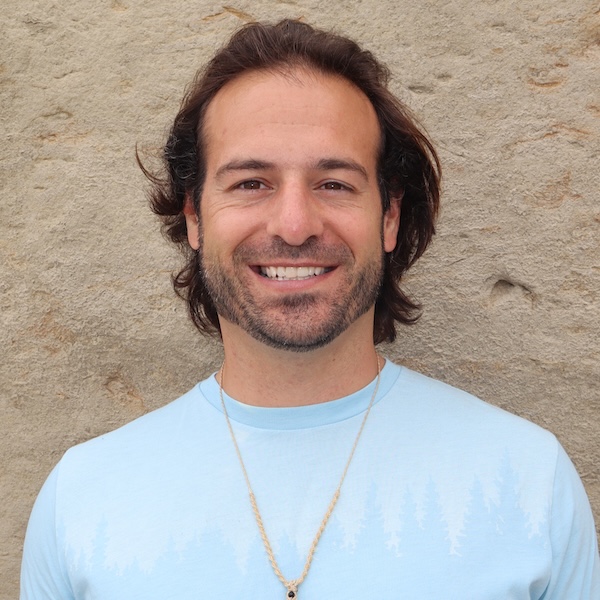
Sam Kabert is a Workforce Emotional Fitness Trainer helping leaders regulate pressure, think clearly, and lead effectively under sustained demand.
His work is grounded in neuroscience, including the 90-Second Rule, which shows that emotions move through the body in roughly 90 seconds. Most leaders try to think their way out of stress, which often keeps them stuck in mental loops. Sam has helped thousands interrupt the stress cycle in real time using the B.R.E.A.T.H. Method and NLP-based regulation techniques, preventing reactivity, burnout, and poor decision-making before they take hold.
A former Silicon Valley entrepreneur, 40 Under 40 honoree, and 3× bestselling author, Sam is leading a shift in the future of work … moving organizations from reactive mental health conversations toward proactive emotional fitness. He also certifies leaders and facilitators to embed emotional fitness as a core workplace capability, strengthening resilience, culture, and performance at scale.
Website: https://samkabert.com/
Free BREATH CLUB Community: https://samkabert.com/club
YouTube Channel:https://www.youtube.com/channel/UCHi-hxuxUe2ZlPJCMkZ7fFQ


Narrator:
Welcome to 909 Exec, the executive leadership podcast from 909 Cyber, where cybersecurity intersects with business strategy. Your host is Den Jones, founder and CEO of 909 Cyber. For more than three decades, Den has led security at Adobe, Cisco, SonicWall, and Banyan Security, helping executives navigate risk, trust, and transformation. Each episode goes beyond headlines and hype with conversations that matter to leaders shaping the world of technology. So please join us for 909 Exec episode 58 with Den Jones and Sam Kabert.
Den:
Hey, everybody. Welcome to another episode of 909 Exec, your podcast for an executive journey. Ideally, your companion. Think of us like your AI companion for your executive journey, except we're bloody real. And we don't sugarcoat stuff, really. We try and keep this an authentic conversation. And I find exciting guests from my network and actually today's guest is brilliant. We met at a networking event and I was instantly drawn to the character and personality of Sam Kabert. Sam, welcome to the show, man. Why don't you introduce yourself? And yeah, let's talk about you for a minute.
Sam:
Den, thank you so much for having me. I'm excited to see where this conversation takes us. Yeah. For a long time, I would say I was chasing success. In a lot of ways, I had to chip on my shoulder or prove something to myself and others for various reasons. And that culminated in 2019 to finally hang seven figures in my business while working less than four hours a day. I was even named to Silicon Valley's 40 Under 40 lists and some other things like that. Long story short, through all the success that I was pursuing or chasing, I actually went through a numbing depression. And that was seven years ago. What I know now was on an unconscious level, I was running on the programming of when I achieve A, B, C, I will feel X, Y, Z. So that always kept me in the future state.
That always kept me on the end destination, even though I knew it was about the journey and not that end destination. I didn't know how to actually be in the journey. And now that I'm a master practitioner of NLP, neurolinguistic programming, that's like what Tony Robbins does. I've learned the model of be, do, have. The idea is first you are very clear on who it is you're being, then you do the action, you have the outcome. For myself and a lot of entrepreneurs and a lot of high performers, they're just stuck in the doing mode. So I was previously operating on the model of, let me do the thing because I know how to do it. Then I'll have the result. And then finally there's that time to just be and it's like, oh, I'm uncomfortable in the stillness. Let me start it all over again.
So that's why instead of going from doing, having being, we go from being, doing, having. So from a high level, I went through all of this success and was like, I got to reinvent myself and here I am seven years later.
Den:
Wow. And in your journey, because if I look at your journey, it's like there's a whole, the emotional fitness trainer piece, you've done keynote speaking, you've done TED Talks, you have an advisory capability that you help people with as well. So from a leadership advisory, why don't we talk about ... So the young Sam, so I think you're a Bay Area born and bred, right? So in Silicon Valley, and I think you kind of mentioned this as part of your intro, in Silicon Valley, there's a mindset of we can go do anything, we can be anything, and everyone's kind of like that entrepreneurial mindset. So what was the Sam growing up like? And what was your aspirations and what was your ... And the word programming, right? What was your programming as a kid growing up here?
Sam:
For sure. Yeah. So I grew up in Gilroy, which is like 30 minutes south of the heart of Silicon Valley. It's the garlic capital of the world, so farm town. So going to Silicon Valley or San Jose like where the sharks play, even though it was only 30 minutes away, it was like going to the big city. So yeah, in the south tip of the Bay Area and Silicon Valley, if you will, my parents are entrepreneurs. They owned a office supply store. They actually just sold it about a year or two ago after 45 years of operating it. And fun little fact, they were the last remaining independently family owned office supply store in the Bay Area, or even I should say the Silicon Valley, the South Bay. And at the time of growing up, they had so many competitors. I mean, I can think off the top of my head, probably at least 10 in the South Bay that were family owned and operated.
And then at some point the big box stores came, the dotcom and all of that. So that started to wipe out these smaller office supply stores. So nothing too exciting, right? But I remember going up to their place of business near the Shark Tank where the San Jose Sharks play and just being in the backseat of the car and listening to my parents talking about business stuff. So it was kind of like ingrained in me from a young age. But yeah, let me see. That's a little bit of context. What was your specific question again?
Den:
So from a programming perspective, I mean, what was your aspirations as a kid?
Sam:
I remember now. Yeah, so that's where I was going with it. So I remember in high school hearing about this concept of work-life balance and I was like, I don't know what I want to do when I get older. I know that I want to wear board shorts and sandals to work because I was really into wakeboarding and things like that. And I was like, I just want this work-life balance, whatever that's about. I knew I didn't want to sit at a desk and be like an office employee. I didn't necessarily have aspirations to start something on my own till college. And long story short, I started my first business my final year of college. I think I was about 22 or 23 at that point when I started the business. And that business ended up being the business that I mentioned earlier that I built to a million dollar company when I was, I think, 31 years old.
So it took about a little less than 10 years. I mean, trying different things. It morphed into a different business. It was still kind of the same one, put it that way. And when I went through the spiritual awakening in 2019, after sitting with the numbing depression, I had the whisper of this concept of soul life balance. I didn't know what it meant. I just was hearing soul life balance and deep meditations and things like that. And it took me several years to really understand what soul life balance was as opposed to work life balance. And then it just clicked for me. I was like, I was so focused on work life balance that I didn't make any time for my being. I always wear like the yin yang shirt like I'm
Den:
Wearing
Sam:
Now for people that are watching versus listening if you have this on YouTube. But anyways, point being, work life balance has the archetypal energies of the yang or yang, which is all about doing energy. It's how we move through the world with the five senses, it's obligations, responsibilities, all those things. So if we look at work and we look at life, we can see there's no energy of the yin, of the being energy of your inner world, of your mental, emotional state or something beyond this human experience called spirituality, religion, whatever. So I realized that soul life balances recategorize ... I can't speak this morning. It's recategorizing work life balance to fit work underneath life because that is all the doing energy. And the sole part of it just means tending to your inner world of your mental health, your emotional health and something greater and beyond this human experience.
So yeah, from a young age, I was just kind of chasing work life balance. Then I mean, having a million dollar company with no employees, just virtual assistance, working less than four hours a day, I had work life balance. It didn't work.
Den:
Yeah. Yeah. And that's the one thing is people confuse financial success with life success and how we define life, what is meaningful to us in our life. And I love where you're going with this because for me, one of the observations I've had over the years, especially for executives that are going through their journey, I had a coach years ago say to me, "I need to start meditating." And this was probably about 15 years ago she said that, and I never really done this until some life events occurred. And then I'm like, "Okay, I'm going to start meditating on a regular basis." And I think it also coincides with the last probably five years, people talking about emotional health, especially within men's emotional health. So I love that kind of journey. And then so as you're starting all these things and you're kind of navigating your brain from being like the work-life balance, soul-life balance, the kind of situation you're in now, because you do a lot of speaking engagements, and then you're the host of a soul seeker podcast as well.
So we'll put links in there for that as well for folks that are interested.
I think there needs to be more and more conversation for executives not to be fearful of that discussion and kind of expose themselves to the fact that, hey, we're all humans. We need to find time for the human element, the nature element and all that stuff. So when you're speaking with clients, and for those that maybe just to educate everybody else here, right? So in your coaching, and I love, you kind of talked about Tony Robbins and kind of bring it a little bit back to the kind of stuff that he does, because I'm sure most people in the world have heard of this guy, right? They may not have heard of you and I, but they'll share the shit heard of Tony Robbins, right? So I mean, how would you describe to somebody what an emotional fitness trainer is? When you talk about your consulting, your advisory, how do you explain it to people and then who makes a good client?
Sam:
Yeah, so let's unpack all this. I love the question, Den. So I love the quote by Dr. Jill Bolte Taylor. She's a neuroscientist and a neuroanatomist. She had one of the biggest TED Talks early on that went viral. In fact, the TED organization attributes their success to her TED Talk in 2008. She brought a brain and a spinal cord on stage. And like I said, she's a neuroscientist, neuroanatomist. She was even named to Times most influential people that year. One of the things that she says often, she says frequently is, "We are feeling creatures who think, not thinking creatures who feel." And we are so disconnected and disassociated from our feelings. And I find it super ironic because, Den, let me just throw it back to you for a moment. When you make a decision to do something, do you first make a decision based off your feelings or do you make a decision with logic?
Because most people, whether it's something to eat or if it's a sports team you follow or be inspired by a movie, whatever it is, we make decisions based off of how we feel, then afterwards we justify it with logic.
Den:
Yeah, that's a bit of a brain teaser really, right? Because we think our ego self, and I don't know if people will resonate with these terms, but the ego self wants to throw logic all over the place. Our soul self will use emotion, think, feeling, be our feelings more than the thing. And I get when people say, when you make a decision and people say, "Trust your gut." I'm like, "Yeah, trust your gut because that's your soul telling you the first thing." And if you sit in silence and you ask a question, the first thing that pops into your head without you trying to rationalize or process it, for me, that's my soul self coming back and giving me guidance, right? And it's fascinating. I mean, do you think that there's executives ... Yeah, I mean, I was going to say, in the conversations you have with people and executives that you coach, do you feel they are calling you because they're already on this path and receptive to these concepts and terms?
Or do you feel that they're just grasping at straws? Because like you, they were having all the success in the world, but still feeling not accomplished or not good about themselves.
Sam:
Yeah. I need to get back to what emotional fitness actually is. Oh yeah. Yeah. A lot of people that reach out, they are either on the edge of burnout, they're stressed, they realize that something needs to change. Other folks are going through spiritual awakenings. One guy I was talking with the past couple of days and beginning to work with, I think he's 61 years old, former military has been in the same business since being out of the military for about like 20, 30 years. He's about 90% there with his business in terms of scaling it and automating it so he can exit the business or not exit, but just have a well-oiled machine run itself. And he's gone through a massive spiritual awakening, right? So I work with both type of people, some that are going through super deep spiritual awakenings where they're almost like babies.
It's just a huge rebirth, even if you're 60 years old, a lot of people like that. And then your everyday business professional, executive, high performer, all of that that is just like, "I need tools to help me with my stress." So emotional fitness. Going back to Dr. Jill Bolte Taylor, who's the neuroscientist, she introduced the 92nd rule back in that TED Talk of 2008, yet I don't understand why no one's ever talking about the 92nd rule. The 92nd rule is neuroscience that states anytime you have a thought, that sends a signal to your body, which creates an emotion. Now, if you allow yourself to feel that emotion, it will move through you in less than 90 seconds. That's why emotions, the root meaning of emotions is energy and motion. The 90-second rule backs that up. But here's what happens for most of us, especially high performers and in Silicon Valley, if we have a negative thought that sends us negative feeling or emotion to the body on an unconscious level, meaning we're not aware of it, we disassociate, we detach from that feeling, we don't allow ourself to feel it, then rather the feeling moving through our body in a minute and a half, it gets sent back up to our mind and we get stuck in negative thought loops.
That's why mainstream society says we have a mental health crisis because people are actually disconnected from their bodies and their feelings and their emotions. Where in truth, we have more of an emotional health crisis because if people learn how to regulate their nervous system just long enough to feel that emotion for two minutes, a minute and a half or so, then all of a sudden they can get clear thinking. They won't ruminate in those negative thought loops. So emotional fitness is the practice of feeling first, which we do through regulating the nervous system with simple breathwork techniques. Then we can rewire our mind, think positively because our thoughts will be clear and that way we can lead with strength and confidence. So emotional fitness, breathe first, feel second, lead with strength.
Den:
Wow, that's pretty cool. Yeah. So we'll take a brief break for a second and then when we come back, I'd love to dig into engagements and stuff. So folks will be right back. Hey folks, just want to take a minute to say thanks for listening to the show, watching the show, however you engage with us. If you're liking the conversations, if you think we're adding some value, we'd love you to like, subscribe and share the show with your friends if you know of anyone else that would benefit. Ideally for us, that will help us be able to grow the show, invest more in the quality, get some more exciting guests and keep bringing you some executive goodness. Thanks everybody. Take it easy and enjoy the rest of the discussion. So Sam, so let's dig into this. So just there, you were mentioning about emotional fitness and I'd love to hear, what does an engagement look like when somebody knocks on your door?
So you mentioned about the military guy and he's knocking on your door, accomplished, but yet now feeling in a state, I'm going to say in a negative space or whatever. So what does a typical engagement look like?
Sam:
Yeah, there's three main ways I work with people. One is through keynotes ... What was that? Keynotes, workshops and trainings like groups, conferences, private teams, things like that. So small groups or large groups, I think a thousand is probably the largest stage I've been on so far. And then another way is one-on-one coaching. I'd offer something called a breakthrough session. It's a deep session that goes about a half day long where we are getting into the deepest levels of someone's beliefs, values, programming. Everyone comes with what's called a presenting problem, that thing on the surface, then it's my job to dig below that and to get to the root, because when we get to the root, that's when we access the fruit. So we get to the greater problem below the presenting problem. Then I utilize neurolinguistic programming, MER that's mental emotional release and hypnotherapy to actually do the release work with that person.
And at that point, that's when we can fill the cup back up with what are the new goals, what are the new values? What is the new vision of yourself? Set your avatar for who it is that you're becoming. That's the next steps. And then the final way I work with people is through training and certifications. So I have a group right now of 20 something people going through Reset Collective. They're being certified in both breathwork, or I should say all three. They're being certified in breathwork, neurolinguistic programming, and emotional fitness. We have people in that group that are therapists, coaches, they're already certified in these ... Other people are certified in these modalities, but they want more. And some folks are just leaders in corporate businesses and they want to bring it into their organization. So keynotes, coaching and training for the certifications, those are the three ways I typically work with folks.
Den:
And so do people pay a little subscription fee? I mean, I'm guessing the answers probably all depends on how they engage with you from a business perspective. I mean, is it like subscription or one-time fees and stuff like that?
Sam:
Yeah. I mean, it all depends. Those are the three main categories, but I have categories outside of that. For example, I have an online community that's completely free. That's called Breath Club. We have nearly a thousand members in that. And every single Wednesday, I lead free guided breathwork sessions where, I mean, if you just saw some of these testimonials, people are overcoming their anxiety for good that was like crippling or all kinds of different things. It's beautiful to witness. In addition to that, they have access to learn breathwork and do it for themselves through pre-record videos. Then I have some other programs, things like that. Reset Collective, I work with people within their budget. The breakthrough session, that's the one-on-one coaching that is a higher ticket price. So it just depends where someone's at financially and keynote's kind of the same thing. I mean, I still do pro bono keynotes when it tugs on my heartstrings and things like that, right?
But other times people are paying $7,500 to have me speak for an hour or a couple hours.
Den:
I mean, do you ever find HR teams are reaching out to you for some of the bigger enterprises because they recognize there's a value here or they care about their employee emotional wellbeing. I mean, do you get much of that?
Sam:
Yeah, absolutely. You familiar with the association SHRM?
Den:
No.
Sam:
It's the HR Association. So I've spoken to a lot of SHRM conferences for HR. I have one coming up in, I think a month to this date actually in Virginia Beach, which is going to be fun. Never been there before. But yeah, I mean, even when I published my fourth book called Soul Life Balance in 2022, my initial talk when I got into speaking back then was Soul Life Balance and the SHRM conferences were eaten it up. They loved this concept of soul life balance. Other industries were like, "Ooh, that's too woo. You can't use the word soul." But the HR, even just looking at the other speakers there and some of the titles of their workshops, the SHRM industry, the HR industry is very open-minded, I would say for sure.
Den:
Yeah. And I mean, like I said, I think the last five years there's been a lot more ... I think COVID helped with this one a little bit, which is people really talking about emotional health. I mean, where do you see the future of, and this is going to be one of those weird, fucking silly questions maybe, but where do you see the future of humanity in the sense of people's awakening to the importance of this?
Sam:
Yeah. I mean, or if your listeners are into the human resonance, that's an interesting tool, see the consciousness rising. To your point, people prioritizing emotional health, even being in the field of mental health for as long as I have been and prioritizing it most of my life and whatnot, I rarely hear the term emotional health. I always hear mental health. For me, I hear more in the past six years, seven years now, six years since the lockdowns essentially, right?
Den:
Yeah.
Sam:
There's been a big prioritization of mental health and that's great, but I see the future of humanity and our wellness prioritizing emotional health. A lot of people will talk about mental fitness, right? And I think that there's just something to your thoughts and mindset that sounds strong, it doesn't sound weak, right? But there's this programming of when it comes to feelings and emotions, it's weak or it's soft, but really that's where the true work is based off of the neuroscience I shared earlier. So I see the next wave being emotional health or what I call and what I'm trying to create a movement of emotional fitness, especially for people that are so afraid to feel their feelings just with them themselves. Forget about expressing with a partner, a loved one, or a colleague, a boss, or anything like that. They're afraid to just sit with their own feelings.
I think it's really helpful to frame it as emotional fitness as opposed to just emotional health. So from a practical view, that's where I see humanity going and culture and future of work. Now, if you want to get more esoteric and talk about spiritual awakening of rising of consciousness, that's always a fun conversation too.
Den:
Yeah, yeah. Well, actually, we can jump into that one because I'm a huge, huge fan of that topic. I was just thinking, as you were saying that, so I think Tony Robbins had a good pod literally six, seven years ago, an episode about emotional fitness or emotional health or emotional strength and emotional fitness. And I was going through a divorce at the time, a separation and a really a lot of emotional challenges. And as I was going through that, I somehow stumbled on that podcast episode. And if I probably ... I mean, I don't know how the outcome would've played out, but I would just say it really, really helped me get my head around what was happening emotionally with my marriage, my living situation, the kids and all of that stuff. And ironically enough, I went through all that nonsense. And then by the time COVID hit, I'm now in my new place and I'm separated, but I was sitting there feeling probably never happier in my life.
And not because of the divorce or all that stuff, but actually just because of my emotional health was just pretty solid. I felt really in a good emotional space, even to the point of being able to reflect back on silly decisions I had made in my marriage or silly decisions I'd made as a parent or mistakes and all that stuff. And I think there's got to be room for us as humans to be able to look back and say, okay, that's already happened now. I'm not changing that. I can't change it. I can't carry the bags either. So emotionally, I can't keep carrying all the bags of all the negative stuff. And I tell people this all the time, at some point they just weigh you down and you don't move forward. You got to realize and figure out how to release and let go of things.
And by the way, yeah, earlier on the show, early episodes, I've had a medium on, I've had an Ayurveda coach, a breathwork coach, all sorts of non-technical. So the non-technical side, because I actually think in leadership, there's technical acumen. And in the Valley, that's a big thing. I mean, it's actually probably one of the bigger things, which is why we've got a very high number of shit leaders in Silicon Valley. But I think to be a rounded leader, you need this side of the game. If you don't have this side of the game, if you don't have an EQ piece of your good EQ tools in your toolkit, good emotional tools in your toolkit, I think it's hard to be a well-rounded leader. But yeah, let's jump in. There's a couple of things because I want to cover, you're also a yoga guy, right? So practicing yoga instructor, you have your podcast, so I want to cover that.
So make sure we don't forget that stuff. But yeah, let's jump in for a minute, just the woo-woo side of the soul, the awakening and all that stuff. In your circles and from your perspective, what are you seeing there, consciousness, humanity, awakening and all that stuff?
Sam:
Yeah, so much there that you just said. One thing I want to mention on is the rumination of the past. To your point, we can't change that, right? And that rumination is the past, anxiety is the future. And this work addresses both of that to help you land in the present and realize anxiety is worrying about tomorrow, a day that's never going to come because all that you have is the present moment. And through breathwork and nervous system regulation stacked with subconscious reprogramming, there is beautiful work you can do to overcome both the past and worrying about the future. And in terms of where everything is going, consciousness, spirituality, all of that. One thing I didn't mention was psychedelic therapy, specifically plant medicine, earth medicine. That was the path that got me here back in 2019. I was very deep into the plant medicine community with ayahuasca, the toad and all the different things.
And I've kind of put that, I don't want to say behind me in the past few years, it's just I've done a lot of healing and work and things like that. And I've I realized as well, the people that I want to reach, sometimes that can really turn them off because they're not ready for that deeper work. So the entry level point of emotional fitness is so much more accessible for folks. Having said that, some of my best friends are still in the medicine community, just put it that way.
Den:
And
Sam:
I'm hearing all the time that there's more and more people that maybe they've never even smoked weed before and they're going straight to the top with Bufo and the toad and a lot of these stories. And that just tells me that the consciousness is rising. And because there is so much dark in the world right now, I mean, I don't feed into the media or the news of all the fear mongering and all that. A lot of that is just to keep you distracted anyways.
Den:
Also
Sam:
From an esoteric point of view, we also know that the light is coming in, so that stuff needs to be exposed for the light to get here.
Den:
Yeah. The whole plant-based thing, that could be a different pod. Actually, I do have another podcast called 909 All, which is for all my alternative non-exec shit or non-tech, non-exec stuff. And actually, so for me, I look at this like there's also a maturity journey. So if you're going to go down a path of spirituality or soulfulness or emotional strength, there is a maturity of this. There's a start here, build up here, get comfortable there, and then your mind maybe opens up a little bit more to these other things. I can't imagine just jumping into a conversation and said, "Okay, day one, we're going to hit some DMT and get some lasers out and let's see what we can see." I don't think that's how it starts. So podcast wise, so why don't you share with everybody SoulSeeker and the Seekers on S-E-E-K-R in the podcast name.
So we'll put the links in for people, but what's the podcast all about? How long have you been doing it? It looks like you're in the hundreds of episodes. So yeah, why don't you share with everyone a little bit more?
Sam:
I had several podcasts leading up to Soul Seeker that was launched in 2019 after my spiritual awakening with Ayahuasca. But back then, I mean, I even had a media network called What Up Silicon Valley with multiple podcasts. We did a large scale event at eBay's headquarter called PitchTank. It was our version of Shark Tank with 20 vendors, judges, sharks on stage, several, maybe about five people pitching, like 300 attendees. It was fun. We did that for four or five years. So anyways, that was my background in podcasting. And then after I had Spiritual Awakening, I kind of put all that behind me and started Soul Seeker. And that was seven years ago at this point. Around the time of hitting the 300th episode just a few months ago, I was like, "You know what? Almost like Forrest Gump, the movie where he just stops running, he's like, I think I'm done running." It was like, "I think I'm done with the podcast." It just wasn't letting me up anymore.
So now I do the podcast just when I feel inspired. I'm not trying ... A lot of times it's so easy, especially people that are high performers and that they are comfortable in their doing. It's so easy to be caught up in just doing without the intention behind it. So rather than getting caught up in like, "Oh, you need to put out a podcast every week to grow your audience and all that. " I'm like, "You know what? That was starting to burn me out. It wasn't fun anymore after seven years. Now at this point, I'd much rather just have the podcast and when I feel inspired, have better shows versus try and keep up with the weekly cadence." So that's where I'm at now with the podcast. But I do put out three short form pieces of content every single day, and I've been doing that for about a year.
So all platforms, wherever you get your content, YouTube shorts, TikTok, Facebook, LinkedIn, Instagram, et cetera, all that stuff. I put out three short form pieces of content every single day.
Den:
And yeah, the podcast thing, I'm a newbie at this podcast business because we're only about 50 episodes in on this show. I did have a show before with my last company. We'd done about 34 episodes, but again, it was all like the last company as part of their go- to market for the company itself. And then this one for me is really similar actually. It's about thought leadership and trying to inspire some executives. The 909 Alt version, which is just a YouTube channel, we haven't really done much there yet, but we plan to do some stuff. But like you say, it's like, I don't want to do it just for the sake of doing it. I want to do it because I found an interesting guest that I think has got something valuable to share with an audience and my specific audience at that. So I know we're getting up on time.
So when you're not doing ... It's funny, most people I'm always like, "When you're not doing this, what do you do for fun?" But the yoga and all of these things, and that seems fun already. So I mean, your life seems kind of fun to begin with, to be honest, but this is your work. So when you're not working, what do you do for fun?
Sam:
Yeah. Today I drove to go surf, but my favorite is just taking my e-bike to just go around town. I live in San Cruz, California, so coastal beach town, and I love just being on my bike, but so much fun, but also just biking to go surf. And I like to say I'm a guy who surfs, I'm not a surfer, because when you live in a place like San Cruz, there is a difference. And I actually am learning drums. I got an e-kit this past winter. You know when it's dark like around 4:30 or something
Den:
Like
Sam:
That when it first switches? I was like, okay, I live by myself. I got to do something and not just watch TV or just work. So I got a drum set. I haven't been playing as much the past month, but for two, three months there, I was really getting into it. And I'm not giving up. I'm just kind of taking a break for now. So the drums has been a fun thing to get into. And I didn't mention this, but my son's a little over two years old. I didn't get a chance to meet him till he was 15 months. Those 15 months plus the pregnancy were some of the hardest time in my life, similar to what you shared with your divorce. And that's
Den:
What
Sam:
Sent me into deeper levels of doing the work and just everything I'm teaching now. It's a lot of what I learned from that period. So now I'm grateful for it. That said, I have a beautiful relationship with my son's co-parenting relationship with my son's mother, and I See him as often as I can. And that's just probably the number one thing that lights me up when I'm not
Den:
And I'll tell you one thing, and then this kind of goes back to you being successful in business. To be highly successful in business, there are trade-offs that you have to make along the journey, and I look at that like personal trade-offs. I talk to people about the difference between glass balls and rubber balls. So in life, we're juggling all the time and we drop balls now and again. And the balls that you don't want to drop with the glass ones, they're the ones that you can't recover from. And I tell people work are all rubber balls. There's almost nothing you're going to do in your professional career that is not a rubber ball. Like you can fuck up and you'll still have the ability, even if you have to leave the company and go and get another job and reinvent yourself, you can still have the ability to be supporting yourself financially in whatever you need to do for work.
But a glass ball, if I screw up the relationship with my kid's parent, my ex- wife, then that's a very hard thing to recover. You can't in your marriage rebuild trust or you can't recover from making some shitty decisions as a parent or as a partner. And for me, that's a huge, huge thing. And I think the one thing that you almost hit on was the word gratitude I think is just important for everybody to be grateful for what they have and look at the positive things and the things that they do have because we're way better off than many other people in the world that don't have these things. And then also those things like your relationship with your son, if you didn't have that, then that'd be a totally different situation for you personally. So let's be grateful for what we got. Drums, what kind of drum kit did you get?
Sam:
What was it? Simmons. I forgot the name of it. It's at EK. It was like 400 bucks, just an entry level one.
Den:
Yeah, it's good to learn. Oh, well, when I was in high school, I was keyboards and drums and played in school bands. And in Scotland in School Band- Oh yeah, we talked about this. Yeah. In Scotland school bands, Sam, they're not the marching bands for your football team and shit like that. It's like rock and roll. It's pop music. So I was on stage when I was 14 years old in front of 400 people. We played Johnny B. Goode, House of the Rising Sun and one other tune, and I was the drummer in the band at that point. We later found a drummer who was decent and better than me, so I then ended up playing keys for the band. Yeah, I wasn't a computer kid growing up. I didn't have a computer. My first experience with a computer was in the music department in my high school, and then they had an Atari 1040 running a program called Pro 12 back then, and it was a sequencer.
So yeah, my first experience in the computer was that. And then all the drums and the music and the keyboards and synthesizers and shit when I was 14, 15 years old. I mean, again, go back to gratitude. I was blessed with having a music department in our school that A, were progressive. They had a relationship with a recording studio. They borrowed synthesizers and gear and all that stuff. I mean, it was brilliant. So yeah, and then released my first record on vinyl in 1994 and worked for a couple of record labels and stuff over the years. So yeah. So Bud, hey, I know we're shooting through time here. Pleasure to have you on the show. I'd love to have you back at some point and we can dig deeper into the topic of the soul at some point in the future. Everybody, if you need some real expertise on the emotional fitness angle, your emotional health and wellbeing, Sam is your go- to guy.
So Sam, Kabert, pleasure having you on the show, man.
Sam:
Thanks, Den. I appreciate you having me. And yeah, for anyone listening that wants to go deeper, join the Breath Club completely free. There's a link in the show notes. So thank you, Den, I appreciate you having me.
Den:
Cool. Thanks, man.
Narrator:
That wraps up this episode of 909 Exec. If you found value here, subscribe and leave a rating to help others discover the show. To learn more about 909 Cyber, our advisory services, and how we help organizations secure growth, visit 909Cyber.com. Thanks for listening, and until next time, lead with clarity, build trust, and stay secure.


.svg)