Exciting News! We are transitioning from Cyber909 to 909Exec.

Host Den Jones sits down with high-performance coach Seamus Fox to bridge the gap between business strategy and psychological alignment. Moving past corporate buzzwords, this conversation serves as a tactical masterclass for CEOs and founders on how true authenticity, strict energy management, and behavioral value alignment directly dictate a company’s bottom line.
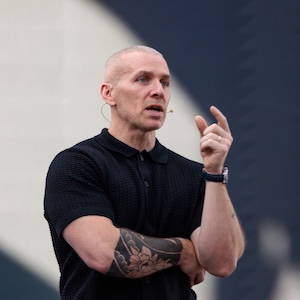
For over 20 years, I’ve been dedicated to mastering mindset, human behavior, and personal performance to help others unlock their full potential.
My journey began in the fitness industry, where I built multiple thriving businesses while working with people from all walks of life. Today, as a coach, mentor, and speaker, I partner with CEOs, entrepreneurs, and high achievers who are ready to think bigger, feel better, and lead more inspired lives.
I provide the tools to help you master your mindset, break through limitations, and align your actions with a value-driven vision—empowering you to achieve meaningful success in both your personal and professional life.
I am deeply committed to helping individuals live healthier, more inspired lives so they can excel in every area that matters most.


Narrator:
Welcome to 909 Exec, the executive leadership podcast from 909 Cyber, where cybersecurity intersects with business strategy. Your host is Den Jones, founder and CEO of 909 Cyber. For more than three decades, Den has led enterprise security at Adobe, Cisco, SonicWall, and Banyan Security, helping executives navigate risk, trust, and transformation. Each episode goes beyond headlines and hype with conversations that matter to leaders shaping the world of technology. So please join us for 909 Exec episode 60 with Den Jones and Seamus Fox.
Den:
Hey, everybody. Welcome to another episode of 99 Exec, your show where we try and help executives in their journey with some wit wisdom and ideally a few nuggets that they put into practice straight away. Every episode I bring in some fantastic guests. No idea where we find them really, but in this case, Seamus Fox. I think this was an outreach to even understand what Seamus is doing. And when I heard what he was doing, when I saw it, I'm like, "Shit, man, we need to speak." Seamus, hey, thanks for coming on the show. I know you're the busy guy. I really appreciate it. So why don't you introduce yourself and then we'll dig into the fun stuff.
Seamus:
Fantastic. Den, thank you very much for inviting me on. I'm looking forward to the conversation. My name is Seamus Fox. I'm a mindset and performance coach working primarily with men in business, CEOs, founders, executives, et cetera. I've been doing that now for, I've been coaching for 21 years. Started out as a personal trainer, Den, as a one-to-one coach. Built many successful fitness businesses over the last 21 years. Exited my fitness businesses a few years ago and now you just work solely with business owners.
Den:
Excellent, man. Yeah. And for those who are good with accents, Seamus is like me. He's from a little island, although my island was a little bit bigger, I guess, but both bloody cold. Northern Ireland for you. A place that's close to my heart. We had a prep call and I don't know if we spent more time talking about my musical escapades and some of the clubs and the people that we knew mutually and whatnot. I love Northern Ireland. I used to be there in my 20s every other weekend and great people, great clubs, good food scene. I think people think of Scotland and Ireland as not having the best food scene. I mean, we do more than just potatoes. So great having you on the show. And the thing that fascinated me when you reached out was I think a lot of people confuse successful leaders and education and training with mainly, especially in the Silicon Valley where I'm at, with technical training.
And we had this great conversation about it. It's not really about just the technical stuff. In fact, in most cases, the technical stuff is the smallest piece of the puzzle. So what got you in? Let's talk about, I want to get into this, but this is a thing that intrigued me about the work that you're doing and stuff. I want to pull back all the way though to Seamus, the young lad.
What was the thing that inspired you as a kid? What did you want to be? Because I'm sure it wasn't this. So what did you want to be growing up and then the environment you were growing up in? Why don't you share with the audience a little bit about that early
Seamus:
Life? Like you've already alluded to, I grew up in Northern Ireland. I'm a child of the 80s and the 90s. So growing up in Northern Ireland at that time was pretty volatile. You had a lot of stuff going on, a lot of conflict, which in the background subconsciously was obviously an imprint in somewhere or form that impacted everybody that kind of grew up and around here. So you had all of that stuff going on and that shaped you in some way for sure. I'm the youngest of seven, five brothers, two sisters. When I was growing up, I wanted to be a footballer. I thought I was going to be a footballer. I'm going to go across the water. I'm going to play here somewhere and I'm going to be a footballer. And I played up until I was about 17 and then I kind of hit the party scene then.
Got into music, got into the clubbing, hit the party scene and that kind of went to the wayside. But I've always been involved in sport. I've always been involved in football from a young age. I played a lot of football, then did a bit of boxing. Later years, tried my hand at MMA when that started hitting the scene. So I've always been in this training and sport for a few years or lost me away. With that and being honest, I kind of lost me away and got into a lot of trouble for about a years. I left school at 16 then and didn't set any qualifications. So in my mind, I didn't have what I needed to get a good job, a good career. Even though I knew I had a lot of potential within myself, I didn't really know how to channel it. I didn't know where that was supposed to go.
So for years, I kind of spent a lot of time trying to find my way. How I find my way to actually coaching was through a car crash, like through my own patterns that I was stuck in, let's say, with alcohol and partying, I had smashed my car head on the wall and that kind of gave me a wake up. I was like, "Okay, who am I? What am I doing? Why am I repeating these patterns?" Which sent me down a path of self-discovery then. I started to learn a wee bit more about myself. I started to understand why I was stuck in certain patterns and I started to learn how to actually really value myself. I got into training again, which I've always really loved, got into bodybuilding, competed as a bodybuilder. I won Mr. Northen Ireland in 2005, the first timers category. And that gave me a catapult into coaching.
I started as a personal trainer back in 2005 and then I quickly found that, right, okay, this is what I love. I love coaching people. I love helping people. I love getting people to chef and change their life and that's inspired me from then and it's inspired me to this day and that's taken many different paths throughout the last 21 years then. So that's a snapshot of what that journey's been like.
Den:
Yeah. The party scene, I always said I was probably the most responsible party animal and I don't think I was, but I think generally speaking, I was pretty, especially when I was doing the music, when I was playing gigs and stuff then I saw that as a job and I mean, I was probably the most responsible one in the band, but it was my band. So somewhere you got to be responsible, but I was dancing around it. And like you as well, actually, I left school with no qualifications. I became a postman walking the streets of Scotland for about a year and a half before one of my mentors and good friends kind of got me on the path of doing IT because he had music gear. Again, it was my love of music that was like, "Well, wait a minute, I'm really inspired." And then my love of technology, because I love musical gear, but then that's a technology play.
And then when I got into IT, I'm like, "Holy crap, I really love tech." And the tech thing was really what inspired me. So in the music scene, as you know, I mean, shit, if I truly took on the gig to DJ in Mangaloof instead of the offer to move to San Jose with Adobe, I probably would have been dead by now, unless probably I met a good woman that kind of got me on the street and narrow probably, right? I mean, do you feel like this is a calling?
Seamus:
A calling as such. I think what I've discovered over the years then and really starting to understand human behavior, and this was something I shared on a podcast recently, most of what I've done through coaching is through lived experience. It's because it's something that I wanted to learn for myself. I've went into a modality. I wanted to learn a certain thing and I've done them for my own reasons to kind of learn and discover more about me first. And as a coach, I thought, okay, well, I really like that. I want to actually go and get qualified on that, studying that, like learn a wee bit more about that because I can use that and apply that. So a calling maybe, but what I've discovered is we all have some sort of purpose. We all have a high value that is what we think about, what we get inspired by, what we organize our days or weeks or months around, what naturally comes spontaneously to us that we want to go and do.
But a lot of the times that gets taken out of us through the injected values of other people, through the injected values of society, who we think we need to be, et cetera. And we often follow someone else's path. But I think that when you find out real purpose and what's most inspiring for you, you could call it a calling. It's something that you naturally want to do every single day. My life has demonstrated over the last 21 years and probably further have a look back and unknowingly what I was doing that I love coaching. I love helping people. I love inspiring people. I love getting people to shift and change. Some of that was created because of the own voids, my own voids that I experienced in my own life and transforming those voids and seeing the changes that I've made. But most of them is because I love doing that.
I love seeing people change and I love helping people shift and change how they think and feel about themselves. So yeah, you could call it a column or you could call it a purpose. The Greeks called it to tell us the end goal of mind is the study of teleology, why we do what we do. They call it the icky guy. There's all these different names for it. But I think
Once you discover it, it's something that eats up all the time in your mind. All you think about is all the things that you want to do and it does become a culinary purpose for sure.
Den:
And when you were young, so either after the car crash or around about that time or before then, did you have somebody that was a mentor that helped you think about changing your life and getting onto a path? Was there some figures in your life that you look up to and still credit?
Seamus:
Yeah. There was one guy, you're probably familiar then there was nobody really talking about mindset. There was nobody talking about goals. There was nobody talking about human behavior. I just wasn't around those types of people, but there was the gym scene and I got into a bodybuilding gym, which is called Pro Gym, which is still a gym that I train on to this day over 25 years ago and there was the owner of the gym, big Dave Fox, who's no relation to me and me and him still trying together. It said to me, he just gave me something at that time because he could see me at that time where I would be in training consistently if you're one week and then I'd be away off in the party scene, then I'd come back and it'd be a way off in the party scene. And when I started getting into consistently after that crash, he said to me, he said, "If you really put your head down, you could be in really great shape." And that was just like some source of belief.
It was like somebody gave me something. I was like, "Right, okay. If he thinks that, then that's what I'm going to do. " And that was the belief and that was like a mentor to me at that time then before I even knew what a mentor was. It was somebody just showing me that bit of belief in me and that was enough to kind of give me the motivation to get my head down and really start to begin to shift and change my own path and my own trajectory for sure.
Den:
And I think everybody has an opportunity to look back and realize there was somebody like a little guardian angel that tried to pull them in the right direction and sometimes we miss the signals and that one sentence that he used for you is a really small signal and the ability for you to translate that and trigger that and be inspired and think, "Yeah, wait a minute, this is great." I was thinking though, you said about mindset, I'm like, I don't know, I remember people trying to give me drugs in the rave scene and it would change your mindset too. Yeah, I got a lot of friends whose mindset's been changed a lot over the years and probably some of them
Seamus:
Went back.
Den:
I remember being 16 and my buddy gave me a little half tab of acids and I was like, "Oh God." And I really didn't know what to expect and strangely enough in I think the '40s and '50s here, there was a lot of studies out of Berkeley and Stanford and everything else about acid and MDMA and things of that nature and then Nixon's war on drugs just totally killed it. But the reality is they're starting to do a lot of tests again now. I think our President Trump, although I don't like him for many things, he did just sign an order where they can start doing testing again, because Joe Rogan said so. And then obviously he's in charge.
Seamus:
Done this project with ibugain and war veterans and they've seen the differences that Ibigain has had on suicidal tendencies and depression, et cetera and how it's like basically transformed those guys from what they were doing through pharmaceutical drugs to try and cure what they were going through to then going and doing some plant medicine and psycho treatments and the change that it's made. I think it's good for
Den:
Sure. And that's the one thing for me that I learned over the years of even being in the party scene and all the raves and stuff was if you've got an addictive personality, you can go down a spiral regardless and if you don't control it and recognize it, then you could be screwed. But the big thing, I'm a huge fan on plant-based stuff, natural stuff, whether it's my food intake or any recreational intake, I'd rather always go like, is it natural? Is it plant-based? And actually even when I go to the doctor and they try and prescribe medicine and stuff, I mean, I had heart surgery and they're trying to give me these highly addictive painkillers and I basically steered clear of them and in the end done some plant-based stuff and that was way better and non-addictive and I got to move on and stuff.
So anyway, we'll pause for a second then after we come back from break then I want to dig into the business. I want to hear all about this thing you got going on. So we'll be right back.
Hey folks, just want to take a minute to say thanks for listening to the show, watching the show, however you engage with us. If you're liking the conversations, if you think we're adding some value, we'd love you to like, subscribe and share the show with your friends if you know of anyone else that would benefit. Ideally for us, that will help us be able to grow the show, invest more in the quality, get some more exciting guests and keep bringing you some executive goodness. Thanks everybody. Take it easy and enjoy the rest of the discussion.
So Seamus, so let's talk about this coaching thing. I mean, there's a couple of things here, right? On LinkedIn, you got some fancy things listed in here from an author to a TEDx speaker to a podcaster helping CEOs. You've got the experience. So why don't you jump in and share with me when people knock on your door for help and in our prep call, it's like, "Hey, it's all around the world. People are knocking on your door." So when they knock on your door, why do they knock on your door? What are they asking for and what do they hope to get out of it?
Seamus:
I suppose it wouldn't be one straight answer for every single person. There's a few different things and a few different reasons why some people come knocking on my door looking for help. There could be a business owner that is on the outside really, really successful, but lacking fulfillment and lacking motivation and drive has kind of got a lost sense of purpose. There could be someone who's looking to hit that next level and looking to scale and grow and feels it's an internal shift that needs to happen. Sometimes there's people that are coming to me that are looking to be part of a community of like- minded men, whether they're doing one-to-one coaching with me or whether that's in a group. Sometimes they come to me and they want me to come in and work with their executive team. So I'll go in and work with their senior leaders and we'll do value determination processes and help the team get forged together and collaborate together so they have a shared purpose towards a vision for the company.
So there can be many different reasons then, but ultimately if you boil it back down to the bare bones, everybody in some way or form is looking to improve themselves. They're looking for growth. They're looking for more fulfillment than life. They're looking to enjoy what they're doing. They're looking, they know that they're on the right path. And what I've found from working with a lot of business owners, CEOs, executive teams, et cetera, is some of them are really, really successful and doing fantastically well on the outside, but on the inside it's different. There's a conflict there. There's a conflict between what they think they want and what they actually really value and the two things are not the same. Most people have an idea of what they really value, but when I take them through a value determination process, what they say they value and what their life demonstrates can be two completely different things and that can cause a lot of different stresses, let's say.
It can cause psychological stress, physiological stress, it can cause stress in relationships. It can cause a lot of problems because you're not getting to be you. Essentially, you're living somebody else's life and every single person wants to be loved and appreciated for who they are, but if you're not being who you are, how do you get that? So big part of my coaching with business owners is getting them realigned with what's most important for them, what you said earlier on, that calling, that purpose, that tell us, that highest value, the thing that really makes you and the thing that really makes you tick.
Den:
In our other conversation before today, one of the things you said struck me, which was if you're behaving one way at work, like let's say you're the perfect, brilliant boss, you're always happy, cheery, blah, blah, blah, blah, blah. Well, there's a yin and yang to this. And we were talking about this, well, where does the negative you expose, where does that come out? And then sometimes that's your home life, your family, your friends. And I think when you talked to me through that, I was like, "Yeah, yeah, I've seen that. " And I never thought about it the way you explained it. So do you want to share a little bit about that side of the thinking?
Seamus:
Yeah, I'll share the same story. Then I was working with a client and him and his business partner were kind of at loggerheads going through a lot of challenges and in his mind he perceived that he was the positive, happy-go-lucky, nice guy in work and in the business and his partner was the opposite, which if you look at human behavior and you look at dynamics, somebody always has to play the opposite role. In any relationship, you'll see this, a mother and a father, somebody's a supporter, somebody's the challenger, somebody's a challenger, somebody's a supporter. We're all taking on different roles at different times. But the truth is you're both internally. You're both positive and negative supporter and challenger at all different times throughout your life. So this guy thought that he should be this person and that everybody liked him because of being that person.
And I said, "Okay, great." I said, "So where does the other side come out? " And I said, "What do you mean?" I said, "There's two sides. You're not always happy, not always positive. You're not always being nice. So where's the other side come out? " And it kind of hurt because it struck a nerve because when he realized when the other side came out that he was suppressing, trying to be liked, he came out with his loved ones at home and I says, "Okay, so what have you just got to be yourself and work?" Both sides be you, be authentic. Do you think that that other side would then come out more at home or would you not feel like you're suppressing what it is that you're suppressing work? And by being authentic and by being both sided, doesn't mean that you're aggressive and cheeky and ignorant to people.
It just means that you speak your truth, that you say what it is that you want to say instead of holding back. And we all do that in some way or form then, especially in business because in business we think if we are this way, then people are going to like us more, but you're not always happy, you're not always positive, you're not always that person. And here's the thing, the person that's usually their most authentic self is the person that really gets to connect with other people and other people connect with them because there's a resonance there.
People can feel it when there's a resonance and a person's just being themselves. And in business, I think that's really, really important because it also opens up a level of connection and vulnerability that you don't have all the answers, that you're not this super fantastic guy that's just going to sort out everything and people will come then they support and people will come with different ideas and people will come in order to help whatever it is that you're doing move forward. But that takes a certain level of, I think one understanding of yourself and two, a certain level of courage in order for you to be that person as well.
Den:
Yeah. And as you're saying that, I think the higher in the organization you go, when you get to be the founder, CEO, co-founder, the executive of the business, I think it can become a very lonely place because you somewhat are your ego, I guess, more than anything else is somewhat trying to create a buffer to protect yourself to protect your ego and then at the same time you feel, because I don't think it's true, but you feel like you can't confide in anybody within the business. And I mean, do you see that being the bigger challenge in the dynamic?
Seamus:
Yeah, for sure. And I suppose that's again, another level that I'm able to offer for guys that I work with one to one. They're able to have that safe space where they can come and have those conversations, share some of those fears and insecurities, look to work through some of those fears and insecurities because yeah, there might be a level of where they can't get to voice those things. They maybe can't show that level of vulnerability as well, for sure. I feel like when you're trying to protect your ego, people will say, "Get rid of your ego, you're not going to get rid of your ego," but there's the false ego, it's pride. And I think that's what people are trying to protect. They're trying to protect pride. The real ego is the real self. The false ego is a sense of pride that we all have in some way or form, which we're always trying to protect.
But I think the more that people work on themselves and understand themselves at that level, the more they get to show up and be themselves. I mean, you want to bear all, but there's a certain level of authenticity that you bring to your team.
Den:
And I'm guessing that when you say be your authentic self, you're not saying, "Hey, just blurt out all the bullshit that's in your head," but there's still a thoughtful communication that needs to come in, but I think what you're really getting at is recognize even in business and in home, it's the balance that you're trying to bring. You can't always be one way. You've got to think of that balance, right?
Seamus:
Yeah, 100%. I look at your authentic self through a position of hierarchy, like the hierarchy of your values. And there's a study called Axiology, which is a study of meaning and purpose, a study of worth and that's where you're going to find your most authentic self. When you're living and the hierarchy of your values and we all have a unique set of values every single person and the more that you get to live in that, the more you get to express what's most important for you, the more you radiate that energy out, the more people become attracted to that. And that's when you're going to feel most authentic. And the reason that you'll feel most authentic is when you live according to your highest values, your most objective and you get to see both sides of yourself, the challenges, other people, and you're able to communicate in a different way.
When you're living in somebody else's values, a lot of your behaviors will be avoiding. You're looking for a way out. So how you know you're going to after something that's really, really important for you is you're willing to go through the pains and the pleasures to pursue it. How you know it's not really valuable for you is you're looking for a way out as soon as it starts to get tough and challenging and your behaviors will demonstrate that. So when it's important, you're there, you're on board, you're inspired, you're taking action. When it's not that important, your energy's low, you use escape as in behaviors, habits and behaviors, maybe eating, alcohol, whatever it might be, because you're not feeling fulfilled, you're not feeling like yourself. So the more that you get to understand the hard of your values and that process, the more you can get to show up authentically and be yourself and do the thing that you love.
I think in society and especially in working in business, it's a key element of helping progress, but it's a key element also of like bringing the team together and everybody moving in the one direction instead of projecting your values on the other people.
Den:
And then I was thinking, so in the scenario where the CEO brings you in to work with the leadership team, that CEO, guy or girl, whomever, they've got a firm view on what they're hoping to accomplish from the engagement. What happens if they don't communicate that well with their leadership team or then you've got a leadership team that already believe ... They're already dismissive of the process because I've got to assume that that happens regularly. So how do you bring that leadership team onto the same page of understanding the process and the value of the process and then do you win them over? What does that look like?
Seamus:
Yeah. Well, sometimes you win them over. Sometimes there's a lot of aha moments because they get to see things differently. They get to see their own behavior differently. They get to understand why they do one thing and don't do another instead of beating themselves up thinking that this is really important and it should be that person. Now I've actually got the look because the questions that I take them through are all internal. I'm not telling them what it should be or what it needs to be. This is about you and this is about bringing out of what's in your mind. These questions are drawn everything out from what's in. So there's not a projection of me saying, "This is your values and it needs to be this way, et cetera." So it's an internal look and if you are honest with yourself, your life is demonstrating it.
So by this process, there's an alignment there. Now as part of the teamwork, then what I do there in that situation is I get every single person on that leadership team to do the personal value determination process and then how we actually get each other to communicate better is through complimentary opposites. You get under the relationship with your complimentary opposite. If you had the exact same values as somebody else in the relationship, one of you's not needed. So when you understand that there's a complimentary opposite, you can see how you doing what's most inspiring for you and fulfilling your values actually helps me do what's most inspiring for me and helps me fulfill my values. So we start working together through that executive team and start looking at the complimentary opposites and seeing how one person doing this is actually helping the other person do this and how that all comes together to help the company move towards the vision.
If you can link the company vision and mission to their personal values, then they're going to feel more inspired to come and they work. Most people are coming and they work to try and live accordingly the company's vision and mission and values, which creates a lot of conflict, but if you can connect them the other way around, then that person feels more inspired to come on their work. They want to show up because it's not helping the company, but they're also seeing how it's helping them.
Den:
Yeah. And sometimes those company or even like company then team organization vision and missions, sometimes they're really poorly written and then so many times I've heard people say like, "Who came up with this nonsense that doesn't even make sense?" And I think like in your conversation with the executive team, do you go through like, "Hey, your vision and mission says this. " And actually the one thing I wanted to ask is you've mentioned what I feel sounds like a methodology a couple of times. So is there a methodology that you're following when you go through all of this or is it all uniquely tailored or uniquely independent to the clients?
Seamus:
Yeah, there's a methodology. There's a method to it. It's a value determination process that I've learned from a mentor of mine, Dr. John DeMartini and this is his process and I take that process in, but it's unique and individual to each person because they're answering it from their own perspective. So they're getting to see what's really unique to them. You know then that in business, as you said, a lot of the times businesses will sit down and go, "Here's our company values." And we put them on the wall and now everybody's supposed to value these things, but that's not how human behavior works. Nobody values the same things. There might be similarities, but that person's coming and they work to fulfill something completely different from why you're going to do work and they expect people to just value the same things as what a lot of the times causes a lack of morale in the team, a lack of performance in the team, because they're trying to live up to something that's not really important for them.
So I'm looking to take it a wee bit deeper and find out what a person's real values actually are, what their life demonstrates, not what they say is important because what you say important is important and what you actually do can be two completely different things. So I'm interested in what you do, not what you say.
Den:
Yeah. And in business, I always think in business there's a dynamic and a set of rules. They're generally written down rules. There's usually like an HR policy or whatever bullshit, right? But generally in business there's do's and don'ts, there's ethics, there's ways you can engage with people. In your home life, you don't have such a thing. So I think that's where sometimes when you go home, you can speak to your partner, your loved ones in a way that is not tolerated in business and you don't. I mean, how do you rationalize with people the ability within business to still say what you think and within those constraints without breaking regulations or getting yourself in trouble or any of those things? Because I think that's where a lot of executives really lose the game because they don't know how to communicate in a way that is true to them or that stressful situation.
Seamus:
Yeah, because morals and ethics are two completely different things from what I'm talking about in terms of values and priorities. You might want to be morally good in a certain situation and because you're looking to be perceived in that way and that's the identity that you've formed within a business. Well, now I'm basing that on wanting to be liked, wanting to be nice, wanting to be good. So now me actually saying the thing that I need to say and want to say, because I don't want to know, because now I don't want to be disliked. I don't want to be seen as morally bad or not the nice person and you not saying that thing is again, going back to that earlier conversation that we talked about with that guy, well that gets suppressed and if it gets suppressed in one area, it's getting expressed in another area.
I think as we already alluded to, it's not that you go in all gung ho and just go mad and say the things that you want to say, but if you can communicate what it is that you want to get done in their values and see how it serves them, then you open up communication. So most communication breaks down when we project, but if we can open up communication by understanding what your values are, then I can say, okay, so how by you doing this and me trying to get across what I think is most important is actually going to benefit you, we open up a better dialogue. So I think nobody wants to be spoke down to, nobody wants to be projected onto, nobody wants to be spoken in an ignorant way, but the user co-dementor of mindset, he says, there's no such thing as a deaf ear when you speak in somebody's values.
So if you know what a person's really priorities are and who they are and what's most important for them, then you can communicate what it is that you want and their values so that both people benefit.
Den:
Yeah. And one of the coaches that we used over the years at Adobe was a brand and communication that was called really strategic communication and it was about not communicating strategy but being strategic in how you communicate. So thinking of your brand, which is for me translated to values as well, I want people to think I'm trustworthy, transparent, get things done. If those three things resonate with me, then are my communications, are my engagement, is my delivery, do what you say as you mentioned, right? Do those things all play into that or do those things play into the opposite of that, right? I think that is vital. One of the things over the years-
Seamus:
Those things like integrity and those kind of, I would look at them as morals a lot of the times. You'll be more integral when you're living according to your highest priorities and what's most important for you. That level of integrity might drop as soon as you start to go down and try and live on somebody else's priorities and somebody else's values. So the more that you get to stick to your priority and your real values, your purpose, let's say, integrity goes up, you can sometimes act without integrity in those areas as well too. I think what I love to do with all people that I coach is they learn to love all parts of yourself because most people are trying to get rid of half of themselves, but if you learn to love all of yourself, you get to be yourself.
Den:
Yeah. I mean, I'm getting a sense it's like we all have flaws who are not perfect and I've had this conversation actually already this week.
Seamus:
Or are the flaws actually the perfections that we're trying to get rid of a lot of the times and we see them as negative and bad, but sometimes it's part of the whole.
Den:
Yeah. And actually that was the conversation I had this week was, well, slightly twisted, I guess, which was for my leadership style, one of the things I want to do early on is I already know where I'm short on stuff. There's certain things I don't enjoy doing and there's certain things that I'm not necessarily good at, but I know that and I think it's really important as a leader to know where your gaps and deficiencies are or the things you don't like because the minute you're building a new team or you're stepping into that new organization, one of the things early on that I like to do was I like to look at the leadership team that I've inherited usually I'm inheriting and then understand who's bringing what dynamics or things to the team and then I'm looking for the things when I know I'm deficient and the players and the team to be like, "Okay, I'm not really good at this or I don't enjoy it.
" You seem to like that, let's have that conversation.
And I'm guessing in your line of work, you engage with a lot of people that maybe they're a little blind or trying to suppress or they're not embracing that side of it. Their ego doesn't or their pride doesn't want them to share that. Whereas for me, I'm like, wait a minute, that lets my direct reports know, first of all, I'm an authentic guy and I'm not scared of having flaws and then faults or deficiencies. And I recognize we all have them so don't be shy about yours too. And if you open that up, right, then I feel that helps. I mean, maybe my old staff will tell me I'm full of shit, but ...
Seamus:
Yeah, I think you hit a couple of key points there and one is like delegation, delegating out low priority and low value things to other people and their values, it could be something that they actually really, really love. And I think all business owners and senior leaders and CEOs that are running fantastic companies, they're the ones that really learn to delegate property, delegate all the other stuff out, know what your highest value is, your unique selling point, the thing that makes you tick and go and do that and try and organize everything else that's not that, try and delegate that out to other people. Because the more you get to do the things you love, the more you get to show up and do that thing and that has a big influence on your energy and when you're feeling energized to come in and grow your company and do your business and do the thing that you love, then that has an impact on everybody else.
And what happens a lot of the times is people are doing low priority stuff that's not really that important for them and it's draining their energy, draining their self worth, draining their self confidence because they're thinking that they have to be this way, but learn to delegate that out, automate it, delegate it, eliminate it. I call it the shit list. I sit down with a client and I go, "Okay, let's get the shit list done. What are the things that you're doing on a day to day basis that is draining your energy and you don't like to do it? Okay, let's look at the two to three things that you love doing. Your superpower, the thing that makes you tick." Everything in that list now has to be a priority that you have to get rid of it. Either you automate it, you delegate it, you eliminate it, you get it to somebody else that can go and do it probably even better than you can anyway.
Den:
And then recognize for them that could be a great opportunity, that could be a career builder, that could be something that inspires them just because it doesn't inspire you, it doesn't mean it doesn't inspire somebody else in the team, right?
Seamus:
100%. Just because it's low in your values doesn't mean it's low in everybody else's values, just because it's not a priority for you, doesn't mean it's not a priority for the business. But if you stick to your priority and get somebody else to do the other priorities, then you're going to get to do the thing that you love to do and that has a bigger influence over the team and the business. As I always say, there's always a correlation between your energy and your business. When your energy's up, your business is usually up. If you're going on every single day and doing things that drains your energy, how's that impacting your business? How is that impacting the team?
Den:
I'm assuming you've came across a situation where a CEO doesn't recognize that they're not in the right seat in the bus to begin with. Just because you found the company, just because you had the idea doesn't necessarily mean you're just the right person to be the CEO of that company. Maybe you're just a shit, you're shit at leading people, you're technically gifted and you don't really like leading people, but you like the technical thing and you just ended up in the seat. How do you coach somebody through that? Because I've came across that when I've met CEOs that had no business being CEOs.
Seamus:
And I've also had that with people who've brought on businesses, generational family businesses as well and then grown that to a certain point and there's been an obligation and responsibility, a fear of even letting that go. But people, as you said, they kind of feel stuck in that seat. For me, it's getting the person back to understanding what those priorities are, what are the things that actually really make you tick and having the courage to just sit in that and do those things. And that might be a difficult conversation at times, it may be a challenging conversation times, but if you're in the wrong seat and you're not allowing other people to come along if they follow that place, then what's the drawbacks to you? What's the drawbacks to the business? What's the drawbacks to the company? Where does it end up if you don't make that change?
Or like, well, what are the things that you might want to go and learn? What are the things that you might want to embody? What is the identity that you could embody? Who would that CEO be if you were to come in and be that person? So there's definitely things that you can go and learn and upscale in. But I think for me, dealing with the work that I do because a lot of the times it's an internal issue. There's a lot of internal conflict between what they actually want
Or what they say they want and what they actually want.
Den:
Yeah, there's probably a pressure that's upon them that makes them feel like they can't leave the hot seat. And then they might know internally that they don't like being in the hot seat. They've got no business being in the hot seat, but the pressure's still there. And then as we close, I said to you at the start, I don't do these long format things because, but then I always find like, wait a minute, this conversation is going great. So I do want to keep it going, but I'll close up on a couple of things. One is, so you do retreats. So why don't you talk a little bit about what's the format of the retreat? Why would somebody go on the retreat? What did they get out of it? Because they're sounding very successful.
Seamus:
I've got one night in September that's going to be in the Al Gar of a place called Quanta De Lagos, beautiful spot. So we rent a private villa, bring in a private chef and we have around four or five days and basically it's a space for guys to come and decompress to get away from the work environment, to get away from the stresses and the struggles and the challenges that goes on in business and running teams and all that. And it's a place to connect with all our men who are going through the same things. So we do a lot of breathwork, meditation. We go to the gym every single day. We do a lot of grounding. We go for sea dips. We might do some cycling. A chef comes in and it cooks breakfast and it cooks lunches, really healthy, nutritious meals. We go out together at night and in between that then it's just time for people to relax, sit at the pool, have a conversation.
If they want to go and have a beer, have a beer, switch off. It's four days to get themselves out of the environment that they're always in and give themselves time to decompress. Maybe they come up with new ideas, maybe they get creative, maybe they get an insight into something. Maybe they don't, maybe they just let their nervous system regulate itself again and bring themselves back and they feel them what that's actually like and then they can go back and do their work. So yeah, the four days are just a space for guys and businesses to decompress.
Den:
Excellent, excellent, excellent. Shamus, I mean, this is great work, man. I think a note for people paying attention when you run your own business and this was an outreach, right? So you've got a newsletter for ... And you do focus on men in business, right? So that's one thing because you've said guys a few times and I didn't start with that, but yeah, you focus on it's mindset and performance for men in business. So you're very in the lane.
Seamus:
I've coached men and women, obviously over the last 20 years, I've coached men and women, but I've solely been focused with men over the last few years. Yeah.
Den:
Yeah. And I think one of my friends and I had this conversation, there was a huge movement on support and diversity in women and I'm a huge fan of that and I do a lot of that as well. But at some point there was a bit where I think some guys were feeling like, "Wait a minute, what's my outlet? Who's helping me? " And it's not to say that it's the pendulum's been swinging in our favor for many years compared to women or compared to minorities, but I also think let's not lose sight of the fact that there are a lot of pressures on men. And I think one thing that's been great over the last few years is 10 years ago, and I think you mentioned this earlier and it started with 10 years ago, 20 years ago, this whole concept of mindfulness as a guy, we get the shit beat out of us is if we start to say, "I'm having a moment." Let's not having a moment.
Get your shit together, mate, and go do some work. So I think it's something which is critical for men who are under pressure feel there's no avenue. So I think the work you're doing is really vital because not to say that we've not had a good in our favor for many decades, but I think the reality is the mindfulness and the emotional piece of the puzzle I think's been missing for so long. We were always the ones that tough it up, tough it up and don't cry about it and blah, blah. The reality is we're humans and running a business is not for the thing apart.
Seamus:
Yeah. And that's true with the guys that I coach, I can see the companies that they're running, I can see the businesses and the challenges and I be like, "If I was putting myself in their shoes with the amount of challenges and stresses and everything that they have, you can get the understand what they're going through. They've got a lot of responsibilities, all those different things that come with running big companies and big teams and having a big vision. So I think having that support from someone else that's giving you a completely different perspective is crucial to how you show up.
Den:
Yeah, exactly. Seamus man, hey, thank you very much for coming on the show. Really appreciate it. Love the work you're doing. We'll have a lot of links in the show notes and yeah, people can get in touch with you and seek out your services because I think there's some great work going on here and yeah, we'll make sure we've got links, the retreat, the newsletter and all that stuff in there for people. Shamus, thank you very much, man. So everybody, Shamus Fox, a mindset and performance coach for men and sometimes females in business if they're struggling too. Shamus, thank you very much.
Seamus:
Den, thank you. It's been a pleasure.
Narrator:
That wraps up this episode of 909 Exec. If you found value here, subscribe and leave a rating to help others discover the show. To learn more about 909 Cyber, our advisory services, and how we help organizations secure growth, visit 909Cyber.com. Thanks for listening and until next time, lead with clarity, build trust, and stay secure.


.svg)