Exciting News! We are transitioning from Cyber909 to 909Exec.

Den Jones sits down with longtime friend and mentor Toni Vanwinkle, Adobe’s leader for Digital Employee Experience and co-chair of AI, to explore how technology, disruption, and human-centered leadership are reshaping the future of work.
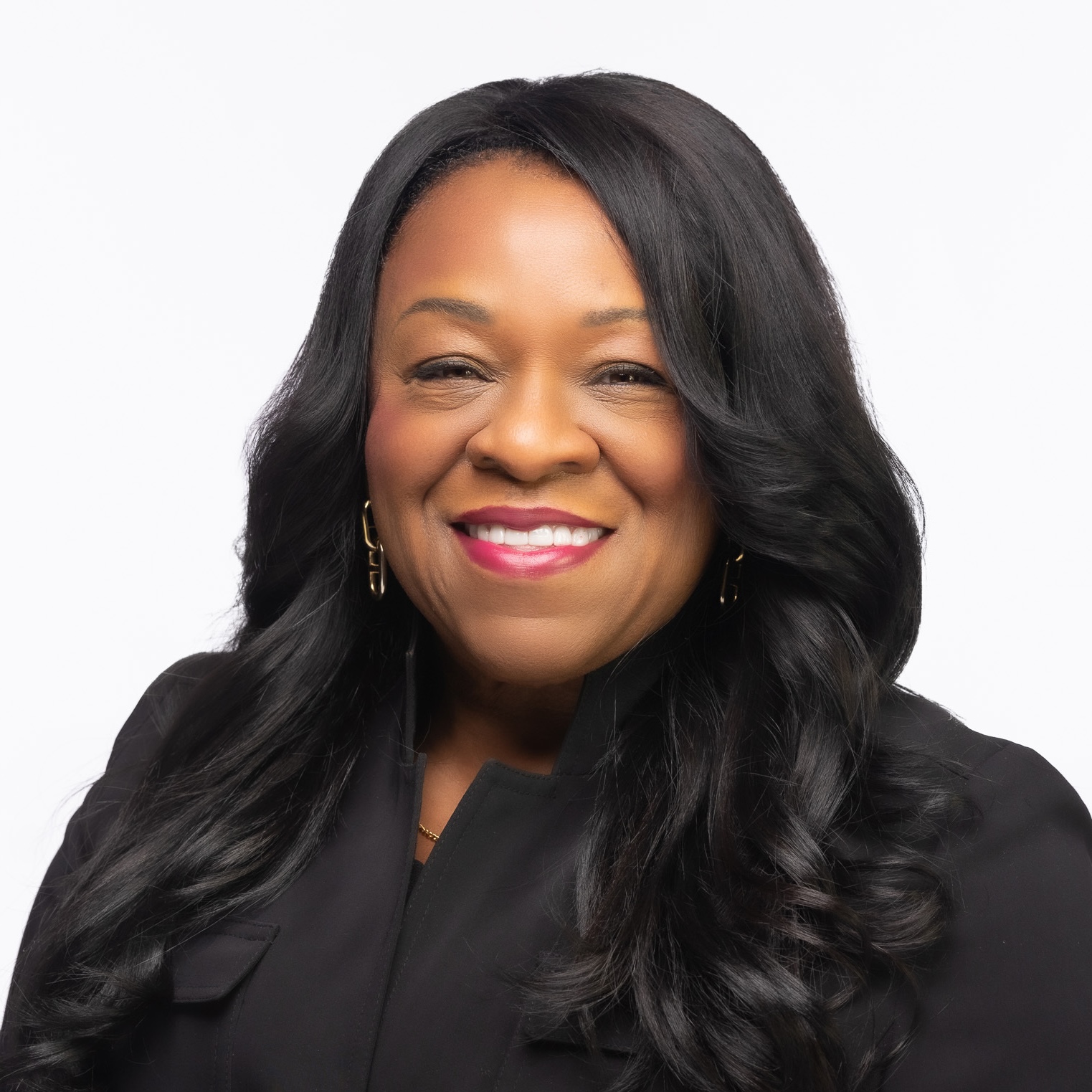
As Vice President of the Digital Employee Experience at Adobe, Toni is a distinguished leader in digital transformation, with extensive experience in strategy, execution, and organizational change management. She has been honored as Digital Workplace Leader of the Year, received the CIO100 award, and was recognized as one of the Top 50 Women Leaders of San Francisco by Women We Admire. Toni frequently shares her insights regarding the human factor in business transformation and the future of work.
Beyond her professional role, Toni is committed to mentoring and community service. She served as the San Jose Council Leader, fostering connections among Adobe employees and the local community. Toni has also served on the boards of several non-profit organizations, including the American Leadership Forum, SV Creates, and currently, the Silicon Valley Leadership Group. A lifelong learner, she is an American Leadership Forum Senior Fellow and literally fought to earn her Black Belt in Taekwondo.


Narrator:
Welcome to 909 Exec, the executive leadership podcast from 909 Cyber, where cybersecurity intersects with business strategy. Your host is Den Jones, founder and CEO of 909 Cyber. For more than three decades, Den has led enterprise security at Adobe, Cisco, SonicWall, and Banyan Security, helping executives navigate risk, trust and transformation. Each episode goes beyond headlines and hype with conversations that matter to leaders shaping the world of technology. So please join us for 909 Exec episode 62 with Den Jones and Toni Vanwinkle.
Den:
Hey everybody. Welcome to another episode of 909 Exec, the podcast that aims to help your journey in leadership. Every episode we bring in some fun guests I think inspire me and hopefully inspire you and today is like no other. We have got the awesome Toni Vanwinkle from Adobe, a good friend of mine, a good mentor of mine, an ex- colleague of mine. We've both crossed ships at Adobe and Cisco, so we're going to hear a little bit about that. Toni, welcome to the show and why don't you introduce yourself?
Toni:
Thank you, Den It's a pleasure to be with you this morning and I would have to say that I've always enjoyed your company and tackling business problems with you. I think you have a unique mindset in the terms of the way that you approach things and so I've always appreciated that about you. My name is Toni Vanwinkle. I lead the digital employee experience at Adobe and what that means is I help people hopefully do their best work through technology enablement and the view of really thinking about our workflows. The other role that I have is I am the co-lead or the co-chair of AI at Adobe. And what a fantastic time to be in the middle of disruption. As you know, Den, I don't shy away from tough problems and disruption. In fact, I may be called a disruptor. So thank you for having me here today.
Den:
Oh, that's brilliant. Yeah. And as you know, I love that title, disruptor. I mean, there's a couple of things here. We'll dig into the AI business I guess a little bit later, but if you can help us explain some of the journey on what led you to, first of all, get into tech. So very early in the days of Toni growing up. And then I'd love to hear the journey all the way to arriving in Adobe.
Toni:
Yeah. It's been a little bit of a career lattice than a career ladder. I started off with an intention to be an artist and to study art history in Europe and become possibly a curator at a museum and so on and so forth. And then at some point in my life, I need to decide what kind of degree to get so that I could feed myself. So I decided to get a business degree and a degree in accounting. And then those days I needed to work and go to school. I ran into my first mentor at a company called Alps Electric. It's a American subsidiary of a Japanese company. We had OEM manufacturing, consumer electronics, and an automotive business. And my role there was in finance. I took a temp job. I reconciled an account for the CFO that other people couldn't reconcile. And he said, "Hey kid, why don't you come work for us and I'll help you pay for the rest of your degree." And I was like, "Sign me up." And what I found in those early days is that Bob moved me from accounts receivable to accounts payable to general accounting, eventually to more of a corporate controller type of role through FP&A and tax and so on and so forth.
And what he was allowing me to do is really get a broad spectrum of what the business looked like. And that's where I implemented my first automations and first ERP systems. And I tell you, I fell in love with technology right then because I found a powerful way for me to solve business problems. I fell out of love with debits and credits. I wasn't going to be an accounting or a CFO or anything like that. That wasn't going to be my journey. So I left Alps and went into consulting. So I was implementing Oracle software around the Valley during the dotcom boom and really focused on startups and SMB size companies. And what I found in that experience is that I had this foundation of business that I could apply to technology to solve problems in an even more effective way. And what an interesting way to think about enterprise technology, technology applications and startups, technology applications in organizations that will win or win or fail actually depending on the foundation of technology they have in their company.
So it was very evident to me that technology was a differentiator. I left that organization and became one of the consultants for a transformation that was happening at Cisco. They were doing the largest Oracle 11i implementation in the world. And this is back when Rebecca Jacoby had just become CIO and Guillermo Diaz was my leader at the time and we were running through technology innovation at scale. What I learned at that company was the fact that humans really need to be brought along in a transformation journey and I learned a lot about organizational change management. So foundation and finance, practical application of technology, understanding how smaller startups and S&B size companies could operate end to end with technology and then doing it in a multi-billion dollar enterprise and applying change management was like the last piece of the puzzle that I needed. And then there was a small company down the street from Cisco that I knew a VP there.
They said, "Hey, go to lunch with one of my employees," which I did. And I brought all my papers in, me and my frameworks and all the tools to teach them how to do release management at scale and they were trying to recruit me and that company was Adobe and I've been at Adobe for 16 years in multiple roles and I've landed at this role. And at Adobe, I've been able to apply my business acumen, my knowledge of how large systems and systems thinking really drive forward transformation. I've been able to apply design thinking and human-centered design as we think about experience and employee journeys and all of that on a foundation that the humans need to be brought along through organizational change management and what I would call empathetic leadership.
Den:
I mean, it's really intriguing how ... And I think that's a really good point or lesson for people, which is, "Hey, I started thinking I was going to do this one thing, Art, and then I landed doing this other thing, finance, and then I fell in love with this other thing, which is really, I mean, I look at it like your careers that of organizational change. Even when we met when you were doing release management, it's like it's still organizational change and you guys really focused heavily on dragging 40,000 people along the journey, which is not an easy task. And if you were going to look at a decision that you made that you thought was a really good one along this journey that enabled or enhanced the journey, is there one that comes to mind that you can think of?
Toni:
I think at a personal level, the decision was to balance what I needed in my life at the time and what I was curious about. And so being brutally honest with myself that I didn't have to follow a predescribed career journey, that I could allow myself to go through not the straight road, but the road that kind of led me to more curious opportunities. So for example, when I left Alps to go into consulting, I did that for not only the curiosity I had in learning more about software implementations and how I could help organizations solve problems.
And I did that because I wanted to have a baby. I had just gotten married and all the stress of my previous role was not helping me get pregnant. I lost a few pregnancies and I decided that I needed to make money, but I also needed to be kind to myself and my body so that I could welcome this new child. And the good news is I got pregnant and I have a wonderful now 25-year-old and that was a key decision for me. And my husband also made an adjustment in that he went from technology into teaching so that we had this container where we could manage our schedules as a consultant. I could take on clients and not take on clients. He could teach classes at certain times of the day and be available for our son. And those are the types of decisions that I think were really critical for me to navigate my career and be true to my life.
Den:
Yeah, I love that. I mean, you and I now have children that are in their twenties and we're like, okay, that feels so long ago now. It does. But I think a lot of people in their career get stuck in this focus on the work, work, work, work stuff, neglect the personal stuff. And I think what you just shared is really, really vitally important. There's two things. One is you've got to take care of yourself in order to be really effective in your job. I remember when I moved from Scotland to here, I didn't move here so I could just work. I wanted to leave California. I mean, what's the point of living in this great environment if you don't get out the office and see it?
Toni:
Absolutely. Yeah, absolutely. It's interesting, Tim, because women often ask me this question about, "Gosh, Toni, you've got the career, you've got the kid, you've got their children, and I have three children from my husband's previous marriage. You have the marriage, you have the community service that you do. How do you do it all? "
And the honest answer to that is you can have it all. You just can't have it all at the same time potentially. And you do need to balance at whatever juncture you are in your life, like with you moving from Scotland to California, what is the balance there? One of the things I know about you is music is so critical for your soul that you always make time for that. And I think everyone needs to decide what are the things that are really going to fuel me so that I can do my best in my career or in my life and in every relationship that I show up in.
Den:
Yeah. And I do know that you mentor a lot of people and stuff and when you're giving advice, how many ... Well, there's two things, I guess. How many people do you think are blind to the fact that there's a level of prioritization they need for themselves and their personal life? I mean, are you seeing a lot of blindness to that where they're so focused on their work? Because I know me in my twenties, I was like, work, work, work, work, work. It's all about work. It's all about trying, and I'm always like that. I mean, do you see that much in people that you mentor?
Toni:
I do. I see a couple of things. I mean, I see that a real drive that what is happening in the office is the only thing that's happening in my world. And I try to open people up to, okay, how's your physical health? If you have any spiritual tendencies, what does that look like? What about financial? Are you thinking you're in your 20s, but you could think about financially maybe you want to retire when you're 40, when you're 20, right? Maybe it's later. I don't know. So I try to help people think about not just the career as a part of their lives, but also the purpose. What is your purpose? What is the thing that really, really drives you? And the fortunate ones have the purpose and the career in on box, but many of us have multiple dimensions of who we are. And I think that makes us really interesting because things that I have in my artistic past actually have fed what I could do in a much more technical capacity.
And it's really interesting because they're both creative processes. So I help people think about themselves as not one dimensional but really multidimensional. And if you're multidimensional, you actually have more to give.
Den:
And I think as well, the more inspired you become by having that rounded life, then the more time you actually feel you have in a day because you really have, I think that inspiration gives you the burst of energy that sometimes you just don't have. And I know motivation for me over the last probably five or six years like many people in the world has been on that rollercoaster ride where you're like, from COVID to a bunch of life changes for me personally, but I look at it like, ma, when I feel energized and motivated and inspired, then I just already feel like I'm going to get up a bit earlier in the morning, I'm going to be excited to sit in the chair and do a little bit of work or a little bit of music or something. One thing I tell people when I mentor folks is imagine you're on your deathbed and you're like in your 80s or 90s, however old you wish to stay alive, but you're looking back at your life and I'm like, when you're in your deathbed, looking back at your life, what regrets do you think you'll have?
And think about that now because you want to live your best life every single day so that in the future you're not looking back and thinking, "Oh, I wish I'd done that. " And I think quite often when I speak to elderly people who are in their last legs, quite often I've always heard like my grandma would be like, "I worked too much. I didn't get out enough or I wish I'd went on traveling a little bit more." And I'm like, "What do you need to do in order to facilitate not having those regrets?" And sometimes it's not taking this stressful job. I mean, you and I both know Cisco and Adobe while can be wonderful, they're great companies to work for, but at the same time, you're taking on a level of stress sometimes. I mean, in cyber for me, that's a little bit more stressful sometimes.
Toni:
Yeah. It's really interesting because both of us have had more operational roles where it literally is 24 by seven. You could be asleep three o'clock in the morning, there's a CSO and you're on the call and solving problems right then and there and you're with your team arm in arm going to battle and that's what it's like to be a first responder, whatever role that is, whether you're in medicine or you're in the military or you're in operations at a tech company. And what I would say is that it's such an argument for making sure that you are taking care of yourself and really as a leader that you are looking at your team and you're saying, "Hey, no, you need to be benched because you are not okay right now. You're exhausted. Go home. We'll find somebody else to put in to battle right now." We need to do that for each other.
We need to do that for ourselves and check in. And this whole thing about living with no regrets, I don't know if anyone has no regrets, honestly. However, I think you need to continue to examine what is value to you
And do you value impact? Do you value relationship? Do you value your spiritual health? Do you value physical health? Do you value being out in the outdoors? And think about those things that you value and go towards those things. Now, a lot of people say, "Hey, I want to be a billionaire. Wouldn't that be cool? That's what I value." And then I don't have to worry about any of that because I can retire at 25 and just have it all. Great. If you can do that, fantastic, but what are you going to trade off to do that? Would you trade your health for that? Would you trade ... Right. What are you going to trade off for that?
Den:
Yeah. And I think so many people, they're unconsciously living their life not thinking about that.
And I just look at it in a conversation. It's just good to make sure that we raise the conversation, we raise the awareness so at least people can make a conscious choice about their balance between working personal life and even within your personal life. I mean, I always look at it like, well, there's the family time with the kids and the partner, then there's me time. I still need some me time. And then for people that have hobbies that aren't just a five-minute thing, I mean, if you want to play racquetball or something, you can go for two hours, you're done. If you're writing music, you're like, "I need eight hours on this thing because there's a ramp up time for creativity and then you're in the moment and you're doing your thing and then you don't want to put it down straight away." And sometimes writing music is getting more complicated than technical, so you need time.
Now, if you don't mind, we'll pause for a brief second. We'll get a little message in here and then we'll come right back.
Hey folks, just want to take a minute to say thanks for listening to the show, watching the show, however you engage with us. If you're liking the conversations, if you think we're adding some value, we'd love you to like, subscribe and share the show with your friends if you know of anyone else that would benefit. Ideally for us, that will help us be able to grow the show, invest more in the quality, get some more exciting guests and keep bringing you some executive goodness. Thanks everybody. Take it easy and enjoy the rest of the discussion.
So Toni, here's a question for you. Right. Okay, here's the question. So Adobe fascinating company, you've got yourself in a great leadership position where I think in your role you have the ability to impact the whole organization, which for you and I, when I ran enterprise security and we partnered with your team all the time on this stuff, it was great to be able to see that in the name of security we were still trying to reduce friction. And the name of security we're trying to get the bureaucracy out that maybe had been in over many years of organic growth in some of these companies. What do you see as being one of the most important things when you think of the future of work in companies like Adobe? I know you've done a lot of this future of work business, right? So I kind of see you as a good authoritative source on this one.
So where do you see the future of work going?
Toni:
Yeah, so there's a lot in that. I don't think you can speak about the future of work without speaking about artificial intelligence and the advancements in artificial intelligence. Sometimes I get the death scroll on social media and there was this great little meme and it was these kids in the '90s talking about the future. And what they were saying is like, in the future, there will actually be a time where you can order food and they deliver it to your house from all these different restaurants, hamburgers, pizza, blah, blah, blah. They deliver it to your house and then you can pay extra for this delivery to be faster. In the future, you'll be able to not just buy albums like go to the album store, but you could actually just listen to music on demand and you can mix up albums and you can kind of like listen to it, be your own DJ on demand.
And in the future, you might actually meet people through a video and you could end up in a relationship with them and marry them. They could be your partner for the rest of your life. I think when we were sitting back in maybe the '90s or the early 2000s, we had no idea where technology would go. And I think we're in a moment now where we can craft where this technology will lead us. I do know from living through the web boom, the dotcom bust all the way through how mobile has evolved, what's happening with security now, that we're realizing those images that were on Star Trek and Star Wars and this type of thing in real life, I want us to shape that. And what that means is we need to be good practitioners in our roles, be that security, be that finance, be that sales, we need to be good foundational practitioners, but we also need to work with this new technology.
I think about asking myself three questions to create the future of work. One thing is, do we need to do that work anymore? That one's a hard one for people because letting go of the past is super hard. So do we need to do that anymore? Could we reimagine a place where some of these tasks were no longer done? And then the next thing I ask people is like, if I had a technology that could augment me, that could be my thought partner, what could I do with that technology? And then the final question is, how could I automate a process that no longer needs to be manual and offload, delegate that to a machine so that we could start to create the future? So I think the future of work for me is a place where humans are really providing the context, the creativity, the critical thinking while working with machines that allow us to have consistency open our aperture to what is possible in terms of reasoning and critical thinking and we can start to create a future where I'm hoping we have more capacity to make impact. I know I said a lot there. So I think there's a lot.....
Den:
Yeah, I think that's great, Toni, because there's a couple of nuggets in here, right? One is the parallels between the web boom and the AI boom. I think it's easy for people like us who have been around long enough to see these things. You're like, "Oh, this will transform the world." But I think the AI transformation is going to make the web boom thing look insignificant really. Yeah, I think it's going to make it look really like ... Where we thought that was game changing and I think the AI thing is
... And even in our business, and I'm sure with you guys as well, all the time we're looking at, okay, well, how can I use AI to almost run an element of the business? So if you think of just a marketing element, I want to scrape data from through the evening, I want to know what things went bump in the night from a vulnerability or news perspective, give me a digest in the morning so I can see that and then also plan some ideas for some marketing campaign that I might do on a specific thing.
Oh yeah, I mean, we're building little apps on Lovable and Claude and stuff and using it for training. It's like annual training thing for your compliance, I think that can be a thing in the past. We're jumping into, here's a monthly little quiz and that quiz is the training and we're recording who's done it and then we're good and we can be really specific to the industry or clients in and leverage AI to build all of that. Yeah, I mean, it's fascinating because Adobe's a company who's building AI into their products and Firefly and all these things, I mean, I think Adobe's been doing an incredible job on this thing. So what's it like trying to help the company use AI responsibly as part of their product building, but then also help the company use AI responsibly as part of their run and improve in the business side of it?
What's that kind of
Toni:
Journey? It's really interesting. It's a balance of educating the population at Adobe around responsible use of AI. It's also a part of the culture. And what I appreciate about Adobe is that we understand that organizations that purchase our products or our partners, et cetera, that we build on a foundation of trust. And I think you can appreciate this, Den, with the business that you're in, that means that is it secure? Is it ethical? Are there biases built into models, so on and so forth? How do we start to address that and lay the foundation? So I think that's what organizations really need to think about as they're building products. You need to educate your employee base. And so not only in proficiency with AI, that's the foundation for everyone, but you also need to help with this critical thinking piece, which is we call it human in the loop, but I call it use your expertise to provide context to this machine.
At the end of the day, whether it is augmented by AI or produced by an automation by AI, you as a human are responsible for the output and the outcomes. That means that you need to be engaged and evolved. You start to talk about people are responsible for the outcome, then you get the lean in, well, okay, then what does this relationship with the machin really look like now? And so that's the thing that I appreciated about it. I also appreciate the fact and realize that bad actors are getting better because they're also using AI and we need to strengthen our position on security. And I advise companies to really lean into that. We certainly do that at Adobe to get to that foundation of trust.
Den:
Yeah. And I'm certainly very focused, hyper focused on the security angle of this. I mean, I think a lot of the way companies get breached, that still remains the same. Social engineering, phishing, clicking links, poorly configured things that face the internet and supply chain. Those remain the main things from a breach perspective. But I think using AI, we've got the barrier of entry for bad actors as much lower than it's ever been before. I mean, they were doing ransomware as a service already for the last five years, but now with AI, it's getting even easier to get in. The quality of the engineering attacks, social engineering specifically is better. And then the personalization using AI is going to be better. And then even with Methos talked about over the last week or so, it's a, holy shit, we're going to have so many more vulnerabilities disclosed out there in the public that we're going to be able to patch things really fast.
So I think the leveraging AI to try and automate a lot of that is going to be how we're ... It's always a cat and mouse game, actually. I mean, there's always bad actors using stuff to attack us and then we're trying to defend it and that's the game.
Toni:
Yeah. Your question about the future of work is really interesting at many, many different levels. One of the things that I do see is acceleration in all things. Acceleration in all things. Thinking, problem solving, solution set, building prototypes, building code, integrating products all faster.
Den:
Yeah. We're building stuff in days that normally teams would take weeks or months to deliver. And for me, yeah, that's brilliant for the ability to have an idea and then have that idea realized by the end of the day if you want. And I'd done something yesterday, a quiz for HR leaders actually about the growing problem of fake accounts and proxy interviews and how much money does American businesses lose on that topic. And I'm like, okay, let me do a little quiz here to get the conversation going and then raise that. And it took me five minutes to get the first thing up and running using Lovable and then refined it, refined over 10 minutes more. By the end of 30 minutes we're published, we're live. And I was like, "And it looks great." And we've done, I think, now three or four things like that. And I think it's just so quick.
Toni:
How long would that have taken you before?
Den:
Oh, it would've been days or weeks. Yeah. Yeah. And I think the other thing as well actually is my skillset, I'm not a coder any longer. I mean, shit, I done coding Tony when it was Cobalt. Remember that Cobalt business? That was this kid. Oh my
Toni:
Goodness.
Den:
Batch files, I was your guy. I could do batch files through the Wazzu. So I'm not a coder, but the ability for somebody, and somebody said this about, I was at a panel discussion, AI investment, and they basically said the limiting factor is our imagination.
Toni:
Yes, that is it. That is the quote. And it's democratized, to your point. No longer does the engineering team get to hold the badge of I coded this. Everyone now has this ability to create in a new way at their fingertips.
Den:
Now here's my hypothesis. I'd love your thought on this. I think with the ability to code and build things internally, now I'll name one brand that I'm very familiar with at Adobe, SailPoint. We use SailPoint at Adobe and even at Cisco, we brought them in there and it's great for your governance and your identity moving around and all that usual stuff. But if you knocked to my door and you said, "Hey, it's a million dollars a year to buy this product and I still needed four or five people to run and operate it. " Well, maybe I'd sit there and say, "That number is a little high. My build versus buy equation, I think it's going to change now because I think you're going to get a lot of companies that are charging multimillion dollar contracts annually and we're not going to want that any longer." We're like, "Well, wait a minute.
I can use Claude and build this thing myself internally and I still need the same number of people to operate it and manage. So from a kind of risk perspective, I'm still managing the risk." So I think there's a lot of companies like that that are going to start to see their business change. I don't know how, but I mean, what do you think of that?
Toni:
Yeah, it's so interesting. This is the SaaSpoculips conversation that people are having here. I believe that we are a little bit away from all of us vibe coding ERP systems. I believe that AI's foundation is data and data at scale is relatively a stable discipline at this point.
What we can do better is the workflow. And so how do you think about the data layer, the application layer, the interface in a different way to get to that data we've talked about trust in a more responsible way, locking that data down, permissions aware, exposing when you need to to get to the answers you need. How do you do that at scale? And I think at this moment of maturity, we need all of those layers. We need the enterprise systems, we need the data governance, we need the security systems, we need all of that in multi-billion dollar giant Fortune five companies that transact at scale. I think we can extract the data faster, we can do the analysis faster, but I don't know if we can run that entire business through a vibe coded application at this point.
Den:
Yeah, not yet. But I think in the event that a company's only using 10% of the features of that thing, and all of a sudden you're sitting there saying, "Well, we only use it for this workflow, and maybe I'll just vibe code the workflow." And one of our clients, they're like, "Well, we just want to do the purchase requisition process." And it's like, "Oh, okay. Yeah, we can do that. That's easy." And yeah, I find myself inadvertently being the CIO and the CSO at a company where I've got to think about ERP systems, Tony. So as you're mentioning the RP, I'm like,
Toni:
"Oh." Yeah. Yeah, right, exactly. I
Den:
Know. Okay. We've got a couple of minutes, love to wrap up with one easy question for you. When you're not working, what do you love to do for fun? Because we talked about art earlier, but
Toni:
I'm not
Den:
Thinking it's painting.
Toni:
It's not painting, actually. So a couple of things. The beach is my favorite place in the universe. So being at the beach is my ... And then I'm not a sunny day beach person. I'm an any day beach person. So beaching the rain, beach in the cold, blah, blah, blah. But I find a lot of peace in my garden. And I don't know if it's a metaphor for planting and growing things and seeing how things transform, but it's a whole magical ecosystem of wonder, honestly. My tomatoes don't grow the same every year and some plants don't bloom and others do fascinatingly well. And so there's a sense of wonder that I have not only in my own garden, but right now walk through follow- and you'll be like, ugh, I can be here for hours.
Den:
Yeah. And you and I share a love for wine. So we both like red wine. I like any wine, actually. I'm not a concert. I do like it. But as I get older, that whole gardening business, I bought a book from an English guy called Grow Your Groceries and it is fantastic. And I sat there and on my little kitchen ledge, I've got kiwi plants growing, which I never ... I'm on my third attempt at getting kiwis to grow from a kiwi that I bought in the store. And then my tomato plants or tomato plants, they are grown from seeds from tomatoes I've got in the store. And then I've got beet root leaves and carrots that I'm regrowing and celery and leeks and potatoes. I mean, I'm like, oh, look at this. I can grow this. And what I think is cool is actually the thought of you're bringing something into the world that is ... It was a seed.
Exactly. So yes, I find that very therapeutic. Yeah.
Toni:
I have to say though, Den, maybe we share this a little bit, is there's nothing more therapeutic for me. I mean, the garden is really cool, peaceful, all this stuff around the ecosystem and inspiration, but if I need a visceral shot in the arm, I need to go see live music. And that is also something equally as transformational for
Den:
Me. Yeah. Yeah. There's nothing ... Yeah, I love concerts and also standup comedy. I think laughter. And we're blessed. We've got San Jose Improv right around the corner from both of us.
Toni:
Yeah.
Den:
Great, great, great, great outlet really. So I know we're up on time. Toni, thank you very much. I really appreciate you coming on the show. Love to have you back in the future and really hear how the journey progresses. Everybody, Toni Vanwinkle, VP, digital experience and co-chair of AI at Adobe our marvelous fancy company in San Jose. Thank you, Toni.
Toni:
Thanks, Den. I appreciate the time.
Narrator:
That wraps up this episode of 909 Exec. If you found value here, subscribe and leave a rating to help others discover the show. To learn more about 909 Cyber, our advisory services, and how we help organizations secure growth, visit 909cyber.com. Thanks for listening and until next time, lead with clarity, build trust, and stay secure.


.svg)