Exciting News! We are transitioning from Cyber909 to 909Exec.

Den Jones sits down with Eric Reiners, CTO of Aprive, executive coach, and author of The Energy Edge, for a wide-ranging conversation on technical leadership, executive burnout, personal security, and the enterprise future of AI.
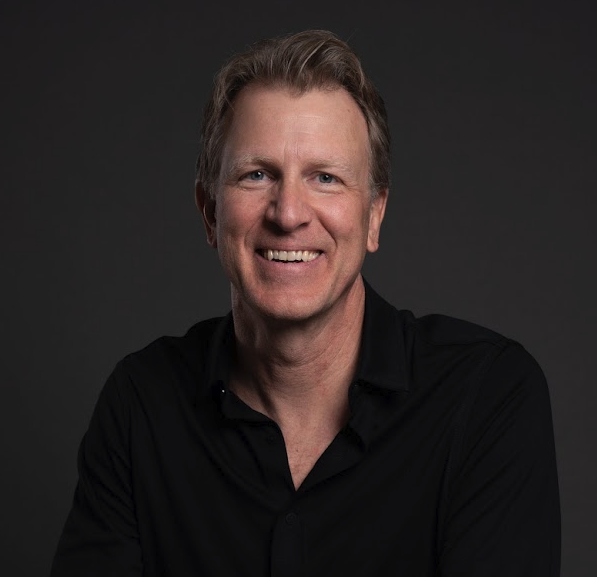
Eric Reiners is a cybersecurity and technology executive, coach, and speaker with leadership experience as a CTO, CIO, VP of Product, and VP of Engineering, and advanced training in applied neuroscience. He is the CTO of Aprivé and creator of The Energy Edge, which applies neuroscience and sports science to help professionals manage energy, focus, stress, recovery, and team performance.
https://aprive.com - digital executive protection
https://bewellmind.org - coaching
https://bewellmind.org/energyedge - the book


Den:
Hey folks, just before we start today's episode, I'd love to share a little bit about 909 Shield. It's our flagship product that helps you trust the human that's on the other end of the phone or the video. Think of this, right? Someone calls your service desk, they want to change their password or their MFA. They're giving you a lot of stress. You need to do it now. There's a sense of urgency. Well, your service desk people, they want to help, so they'll go reset the password. But today's process is to validate that that person is real on the other end of the line. They're just not up to the challenges of the attacks we're being faced with. 909 Shield helps protect your company and your service desk from these kind of threats by doing identity proofing, biometric, and AI fraud, all wrapped into a nice little bundle.
So please, if you want to learn more, go check out 909shield.ai. Hope you enjoyed today's show. Thanks folks.
Narrator:
Welcome to 909 Exec, the executive leadership podcast from 909 Cyber where cybersecurity intersects with business strategy. Your host is Den Jones, founder and CEO of 909 Cyber. Den has been a practitioner for more than three decades, including leading enterprise security at Adobe and Cisco, helping executives navigate risk, trust, and transformation. Each episode goes beyond headlines and hype with conversations that matter to leaders shaping the world of technology. So please join us for 909 Exec episode 68 with Den Jones and Eric Reiners.
Den:
Hey everybody, welcome to another episode of 909 Exec, the podcast that hopes to inform, excite, I don't know, something like that. Executives on your journey. If you're an executive and you're on your journey and you want to learn something, this is the place for you. Every show we've got some unique guests. And it's funny because normally the guests I have, they have one job and they've got one finger and one pie. But Eric, thank you for joining. I mean, you're a CTO, coach, advisor, author, you're a cyber guy, you're a business guy. You seem like you've kind of done it all and you're still doing it all. So just before I screw up your introduction, do you want to share a little bit who you are and then we'll go from there?
Eric:
Yeah, thanks Den for having me. Yeah, so I'm currently a CTO of a cybersecurity company called Apribe. We're digital bodyguards for executives. So think of us as applying enterprise grade technology to the individual and the family. So whatever that type of technology and process, you know this stuff better than anybody. Think about that as applying it to privacy and security issues that families might face, especially high profile individuals. Let's see. The other part-time, let's see, other jobs I have. I'm also a coach. I started a company called Be Well Mind. I got really stressed out, a lot of chronic stress in cybersecurity. I was a CIO of a public cybersecurity company called Rapid7. And I had a security incident where it was me as the incident commander. I collapsed from exhaustion and had a wake-up call. I was not maintaining my physical and mental health while trying to perform in the corporate world.
So that led me down this path of how can I transform my work and do it sustainably over time? And that led to Be Well Mind, which we might get into a little bit. Just got a book that's coming out as well called The Energy Edge that's helping people in complex environments really manage stress, cognitive load, decision fatigue, all the things that specifically in cybersecurity. I tell some stories from my background in cybersecurity. And then yeah, I think that's about it.
Den:
Well, we do get to dig into all of that and I'm sure just a little bit more as well, right? So first of all, thanks for coming on the show. Delightful to have you because you're one of these guys that you've been a technical person that's risen through the ranks, but let's start. I want to go further back because obviously people can look on LinkedIn and they can go far back and stuff, but let's go really far back. What got you into tech to begin with? I mean, what was the young Eric like? What did you want to do when you were going to grow up and how did you get into tech?
Eric:
Yeah, so I was one of these kids that was super curious about how things worked. I used to take stuff apart when I was a young kid. I grew up on a farm, so we're always replacing stuff, fixing things. And I got in trouble for taking the vacuum cleaner apart when I was nine to try to figure it out. I couldn't put it back together. Then I got into software hacking video games specifically. So I got my first computer when I was, I think it was 13, a Commodore 64. I might be dating myself here, but that thing was so amazing. It beat the Apple II and all the specs and I could write video games on it and I got really immersed in that. I'd fall asleep at the keyboard. I was a self-taught hacker programmer from a young age. I wanted to be an engineer when I grew up.
I eventually got there, but I took a roundabout path. I studied physics. I thought I was going to be a physicist and then I hit a math class that broke my brain and decided that I was not cut out for physics. But I was really good in the lab and I loved building stuff, so I kind of got into hardware hacking. I think you and I share an interest in music stuff. I studied musical acoustics in my undergrad and got to play with all this awesome instruments and microphones and I studied flutes and clarinets doing time domain simulations of flutes and clarinets. And that's kind of what synthesizers are made out of these days. You probably know about this stuff, but anyway, so I didn't really get into, I never took a computer science class. I was self-taught and I started writing C++ and C in college.
And then I found out that you can make money as a programmer. I didn't even know that really. And my brother had moved to Silicon Valley. I was working at a company called Radio Shack. If you ever remember RadioShack, it was the electronic store in small towns around America. And so I did that in college actually, and I was selling cell phones. I was setting up computers for people, doing car stereo systems. I learned how to hire a fire. I got my own store eventually and ran that for about four years after college. And then I got some stock from that company and as soon as it vested, I put in my two week notice and I moved to San Francisco and started working in Silicon Valley actually as a C++ developer.
Den:
RadioShack is funny because I think they don't really exist, right?
Eric:
Yeah, they went bankrupt in, I forget what year, but they've kind of resurrected the brand because it has a good brand name and stuff.
Den:
Yeah.
Eric:
I
Den:
Though that. I knew they went down, but I thought I saw recently some RadioShack thing somewhere. But yeah, the good news is I'm guessing that most of the people that watch or listen to the show, they're probably old enough to remember RadioShack and Fry's and some of those other places. Fry's
Eric:
Is out of business too. Those are the places you go to build stuff, robots and just hacking electronics and everything. So I'm a bit of self-taught software and hardware hacker.
Den:
Yeah. So I'd love to dig in a little bit about, so you're the programmer, you're starting your career. So where was that when you moved to San Francisco? What was the first gig out here? What was the company and what kind of work did they have you doing?
Eric:
Yeah. So I worked for a company called Serena Software. It had been around for a long time. So I moved there in 1999. This is when. Com was going crazy. And every month there'd be a different sign on every building I drove past because the companies were spinning up. New startups got 10 million in cash so they put the sign on the building. And I worked for a company called Serena Software. They were business management software. So anywhere from, if you had code moving to the mainframe to any distributed systems, they managed that code. So think of it as early application lifecycle management, software change management kind of stuff. And that was an awesome gig. I started as a C++ developer, got into Java, became a software engineer, and then eventually a manager. I was a senior software manager by the time I left there.
Den:
And so that transition going from the IC into your first management role, what was one thing that you wish you'd done differently that was your bigger learning? Because that's a hard transition for most techie IC people. So yeah, what was your learning in that transition?
Eric:
Yeah, I work with folks on this a lot. I was a terrible manager for three years because I was a good individual technical contributor and I kept trying to do the work when I became a manager. And I had a small team of four people, but I was hands-on doing stuff. And eventually the team was like, "You got to get out of the way because we're fixing all your bugs and doing all this stuff." And then what I did is I dove into. I got thankfully a good mentor and coach that taught me about delegation and all the good stuff you need to do as a manager. And then I read some books and I started experimenting. I'd taken something from a book and then I'd use my team as kind of a laboratory to test it on. So they had to go through that for a while.
But eventually I started to learn people need autonomy, you need to delegate, you are not doing the work anymore, you're responsible for growing that team faster than the business needs them to. And that's not just in people, but that's in skills and capabilities and relationships and all that stuff. So eventually I got it, but classic take your tech lead and turn them into the worst performing manager on the team story.
Den:
I think I was three to five years. I don't know. I think it might have taken me a little longer. I really struggled like you because I thought I could do everything faster than everybody else, not necessarily better, but I'd get the result and I'd usually get it quicker.
My approach as well, I was just this headstrong, arrogant, little European Scottish kid and I was just like, "I'll do this shit." And I took pride in the fact that I could get results and get stuff done really decently well and quick. But the one thing that you mentioned there is how do you get out the way of your team? How do you enable your team? How do you clear the runway? And I think that's the biggest challenge for anyone that goes from an IC to a leader is it's hard to let go. It's really hard to let go. And the mentor that you had, what was that lasting piece of advice that they gave you then that you still carry with you now?
Eric:
Yeah. Oh man. So my mentor was a guy named Manny. He was right-hand man to the CEO and I was just a junior developer when I started, but I got my first management role and he was like, "Eric, you got to stop committing code. You need to spend more time coaching and inspecting work is important as well. You got to keep your edge so you know that what's being built is the right architecture, the right design, and you can smell when things are off." I still contribute code up until I was a director of engineering, and now I'm CTO. I'm very hands-on in this modern world. But yeah, I think that was the biggest thing is just learning how to delegate and trust and give people autonomy. As long as you set out the mission correctly, people will figure it out.
Den:
People
Eric:
Will figure it out.
Den:
I mean, do you think one of the hard things as well is if they don't figure it out in the timeline that you have envisioned, That's When you feel like, "Oh, I need to peel this back a little bit myself. What's holding these people up?" I catch myself doing that a lot.
Eric:
Yeah. One of the worst things you could probably do is question someone's estimates. And engineering estimates are notoriously wrong, but there's a way to do that that is not questioning their intelligence. It's like, "Well, what could we do to maybe do it sooner? Could we cut scope? Could we change the date? Let's get creative here." There's different ways of asking that. When I sense that something might be a little bit off, there's a way to ask it differently that people are more open to answering. And
Den:
There's usually not that many levers. I mean, I always think of it like any project, right? You've got scope, you've got time and resources, and that's scope, time, money, resources. It's pretty much those three levers. Money and resources to me is the same lever, really. You either add more people to it or whatever. But yeah, there is a way, and I always got feedback. It's like if I don't lead right, then you're kind of hampering their creativity, you're basically killing their morale because they think you don't trust them.
So yeah, it took me a long time to learn that. And then so Rapid7, you mentioned something which sat with me, was the kind of burnout on the, you can't kill yourself for these companies. And I think right now, we're in a really interesting time. I had this conversation last night with some execs. We're in an interesting time where I think loyalty to companies is really at its lowest point ever, because I think companies' loyalty to their staff is at the lowest point ever as well. I see these ruthless layoffs that happen in the valley where it's almost like we've disabled your account, we sent you an email, bye, and you've been there for 10 years busting your ass, and now they're asking you to be loyal. And one of the conversations, I was at a networking event, one of the conversations was that one of their partners is one of the biggest companies in the valley, and they're doing this monthly meeting with them.
And the people from that company joined the call and they always make these flippant statements about we're going to do this every month checking. It's like, well, if I'm here next month, the morale is really low in some of these companies. So I kind of look at it as leaders, how do you manage burnout? So you were saying rapid burnout, how do you manage that? How do you manage morale at a time where I think morale's the lower than it's ever been?
Eric:
Yeah, there's a lot in there. So for me specifically, I was not managing my stress. I was accumulating as chronic stress. And it felt like, you ever seen or heard the electrical wires in a thunderstorm? They're kind of buzzing?
Den:
Yeah.
Eric:
I felt this buzz in my body that wouldn't stop. And if I would've paused and listened, like, oh, I need to walk away for a minute. But I was just so in the incident response that I couldn't get out of it essentially. So yeah, one of the things in the coaching program that I run, I help people listen to their body a little more, and it's usually right. It's usually telling you something that you need to listen to because biology will always win in the end. You can push 60, 70 hours a week and you can do that under deadline for a couple weeks, but if you keep doing that, it's going to accumulate and you're going to have some issues, health issues.
And then on morale, what I found, and there's some really good research on this, which is people need autonomy. No one wants to be told what to do. And some managers are micromanagers and they get in there and tell you how to do the work. They haven't been trained on delegation and things like that. They need curiosity. They need to work on something they're curious about. I always love learning new languages, new libraries, building a new system.That's what got me up in the morning, getting super excited about learning something. They need to have mastery in their craft, which is they need to practice it. So give them harder problems than they've done before and help them step up. I had a great coach that taught me, my CEO said, "Having low standards is condescending." I was just like, "That's great. If you don't expect a lot from your team, you're not going to get a lot." So set really high expectations.
And then the last thing is really purpose. Give them a reason why they're doing it and they're just going to feel like they're going to have limitless motivation against hard problems for long periods of time.
Den:
Yeah. The burnout one's really near and dear to my heart. I speak with a lot of people about this, which is really, you talk about work-life balance, but it's not really about work-life balance. It's really about somewhere being able to switch off. And we had a coach years ago in Adobe that came to me and she was like, "I then need to meditate." And then this was long, long, long ago, and I obviously didn't. I didn't do anything really. I mean, I'm going to the gym and I'm playing soccer and stuff. That was my health plan, but out in nature, meditation, just switching off, my brain really struggles and still to this day struggles to switch off. So I have taken a meditation and I do yoga three or four times a week, so that really helps.
But I recognize, and it's like any parent actually, you can't be useful to your family if you're not good with yourself first. If you're not healthy, if you're not in a good space, then that gets taken out in everybody else. We've had a few other guests on the podcast that talk about mental wellness and breath work and all these kind of things, because I think they all are vitally important, especially as an executive, especially as we go through that journey, because it's just almost an assumption that we're going to be able to ride it out, like we're going to be able to handle it. And if you look back at our careers, there's not necessarily been much in the way of training or support system for high stress events, and security incidents are one of the higher stress events that anyone can go through. I mean, that for me is a good part of your business and your coaching piece, which I think is just insanely required, but nobody really does enough in that space now.
When you think about inspiring others, one of the things that catches my eye a lot is that balance between I'm going to really set the challenge, we're going for the moon and you might hit the cars or we're going for the cars and you might hit the moon. And I always use the analogies like imagine you want a BMW, but instead of a BMW, you're going to shoot for a Mercedes or a Porsche. I'm like, "But if you don't get there, then you're going to end up with still a great car." I was like, "So whatever you're shooting for, you got to do that moonshot." And a strategy, one of my old bosses said this, "A strategy that's not controversial isn't exactly a strategy. It's kind of the same. It
Eric:
Should scare you a little bit. It
Den:
Should scare you a little bit. Yeah. And I think it was somebody at Stanford. Oh shit. They had this whole. I'll need to try and remember to put it in the show notes, but there was this whole concept of it's a really scary BHAG moment. Oh,
Eric:
Big, hairy, audacious goal. Big,
Den:
Hairy, audacious goal. I
Eric:
Forgot who came up with that, but it's pretty good.
Den:
I love that. I thought that was brilliant. And feedback I got from my old teams later was I was a pain in the ass to work for because I always had these unrealistic expectations, but when they worked for other people after I wasn't there, then. And several times Adobe, this happened to me, the people used to be in my team after some reorgs. They were like, "I heard there's going to be a reorg. Can you ask if we can get moved back under your team?" So they didn't like it because I asked the impossible, but they loved it because they loved the challenge and their resumes were filled with stuff that was great, great
Eric:
Accomplishments. Isn't that amazing? I've worked on small teams that have done really audacious things and changed and got won industry awards. And then I've worked on bigger teams that have moved the needle a little bit for the business, grow a product line by 20% per year. That's good,
Den:
But it
Eric:
Wasn't like the bold strike, like we're going to take over a whole new market here. That's fun. Yeah,
Den:
That's
Eric:
Bold.
Den:
Yeah,
Exactly. So we'll take a brief minute for the message and then we'll be right back folks. Hey folks, just want to take a minute to say thanks for listening to the show, watching the show, however you engage with us. If you're liking the conversations, if you think we're adding some value, we'd love you to like, subscribe, and share the show with your friends if you know of anyone else that would benefit. Ideally for us, that will help us be able to grow the show, invest more in the quality, get some more exciting guests and keep bringing you some executive goodness. Thanks everybody. Take it easy and enjoy the rest of the discussion. I really want to dig into. Let's talk about the stuff you're doing now. So you leave Rapid7. What got you from going from there to now this entrepreneurial mindset where you're starting to spin up your own businesses because you've got several fingers and several pies all at the same time.
So let's talk about that transition and what was the cause of the transition and then what was the inspiration for you to start some of the things that you've started?
Eric:
Yeah. Back to that motivation and morale piece. I was the CIO at Rapid7 for the last four years. I left in the end of 2022. One day I just kind of woke up and I was like, I just didn't feel that same level of motivation. I wasn't as curious anymore and I felt like, "Hey, I've had a really good ride here. I had an awesome career and I think my work is done and I need to go do something else." So that led to some conversations, which eventually led to a transition out of Rapid7. And I treated it like that first few months, I was pretty intentional about that. I went and visited my team across different offices. I went and I wrote thank you notes to a bunch of people. It was a really meaningful time to say goodbye to a bunch of folks.
And then I went off and I didn't really know what I was going to do. I'd gone back to school. I got a master's in neuroscience. I had started doing some coaching. I put up a shingle as a coach and I started doing free coaching sessions. I'm now at, I think 850 of those, and that has been kind of amazing over the last three years. And from that came what's called the corporate athlete program. Along the way, what I found was there's a lot of anxiety, and we need to talk about it. People that are, I call it successful on paper, but miserable inside, they're doing great, great job, good title, making good salary, doing cool things. But for me, what it felt like is I'd drive home and be like, "Is this it? Is this what I'm doing?" I had this kind of just, I don't know, restlessness a little bit, Dan.
I can't really describe it other than I need to do something else. I kind of missed the early days when we were a scrappy startup and taking over the market and doing fun stuff and really audacious things, and That Was really fun to me. So my buddy Gary called me about a year into leaving Rapid7 and he started Aprive and I said, "Hey, do you want help with the technology?" And he's like, "Yeah." So I took about a year to do the coaching stuff and I'm still doing that part-time. And then I came on as the CTO of Aprive, which has been super exciting. We've been growing and building the product and we launched last September, we've got market fit and now we're scaling to the enterprise, so it's
Den:
Pretty fun.
And the thing that I love about this company and the stuff you guys are doing is a lot of executives, especially the CEO level people, they think security applies to everybody but them. I mean, there's the odd ones that take it seriously and they'll say, yeah, yeah, yeah. Then they nod up and down, and then you go to them and they're like, "Well, are you doing this?" They're like, "Oh no, no, I don't need to." But they don't recognize they're one of the largest targets in the business, if not the largest. And then I don't need to hack the CEO, I'm just going to hack the CEO's kids Because When I hack them, then I'm in their home network, and then when I'm in their home network, then I can launch the attack against the CEO in an environment where that person feels more comfortable and likely the security around the other devices on the network are pretty lax. So for me, I'm like, that's an easier target. Now, flip side to that, I used to think I'm not as worried about my house and my home network because it's just as easy to attack 40,000 people in a company like Adobe in Russian roulette every single day that someone's going to click a link. So I kind of think of there's that flip side, but the executive one I think is the most underserved kind of market given the level of the risk. So when you guys are talking to prospects or anybody about what you're building and what you're delivering, how do you describe it?
How do you describe who the ideal customer is And Then what is the value proposition?
Eric:
Yeah, good stuff. So we really look at five to 30 million as kind of the sweet spot above, so very high net worth individuals, or you have a brand or a reputation that's very prominent, politician, sports figure, celebrity, that kind of profile. So that's kind of what we narrowed in on our ideal client. What we find is that the corporate perimeter stops and you go on vacation with your personal laptop, your iPad, and your iPhone, and occasionally you need to transact business. It could be a financial transaction and you're using a personal device for that. If the corporation's got two factor authentication and really good protections to access the corporate services, that's great. But what we're finding is malware, key loggers, we're finding really interesting things that when people travel to hotels, of course, airplanes, coffee shops, we find all kinds of stuff. On our onboarding, we've found things and cleaned up things that.
Well, you would understand, you would recognize it, but it's kind of shocking. We found a key logger that was in place for six months prior to an onboarding situation.
We don't know how much was taken, every keystroke for six months. We immediately removed it, changed all the passwords, put 2FA in front of all the financial services, things like that. So to answer your question, what we're finding is this is the soft underbelly of the corporate world, the corporate executives that are traveling, there's location data, there's social media presence, there's data that allows you to find out where they are, what they're doing, where their second home is, who they're traveling with, and then you've got a bunch of unpatched unmanaged devices in that house. And as we know, exploits are getting faster and easier to create with AI, and so it's no longer just good enough to patch. You have to monitor traffic and you have to protect the home network itself. So that's kind of where we cover. So we have six security controls we put in place around the family and their personal devices and their home network.
Yeah,
Den:
That's brilliant because I think there was a couple of things I was thinking of there. One is, I mean, you talk about the financial transaction for the business, but the reality is a high net worth individual is also doing personal financial transactions. If you're worth 50 million, you're a great target for five million. I can maybe log into your bank or your brokerage account or something and steal your money pretty easy. I guess the other one I was thinking of, it's funny, my brain's a bit messed up, I guess. The other one I was thinking of though is a lot of executives, not a lot, many executives that are unfaithful or doing shit they shouldn't be doing, which I actually think the number is many, many executives, they've got their public persona and then there's this soft dark underbelly actually of their lives quite a lot of the time.
Go to Coldplay concert with your HR executive is an example. So there's stuff like that that happens in the background. So I even think of extortion and things of those, that ilk being something that could be damaging to the executive, to their career, to their family. And I think if they're not careful, that's the other thing that can happen. So it's almost like I could extort you very easily.
It's not hard yet. That stuff is not hard. And it is funny you talk about key loggers. It's surprisingly easy to drop a key logger in someone's device. I mean, I don't think people understand that to do that is pretty simple. As my 16-year-old son and I, we have this conversation probably once every couple of weeks, and he's a curious little kid and stuff, and he's into the tech. So he just asks me these questions all the time. It's like, "What's a good key logger? How would you deploy it?" And I'm like, "Oh no." I said, you're getting arrested -
Eric:
Young hacker in the house.
Den:
Probably not be great for my brand, or maybe it would be. I don't know.
Eric:
Maybe we'll work on an offensive security team. He'll be a red team or
Den:
Something. So that's the thing is there's a lot of great educational tools out there for kids like that. So I try and direct them down the, you're hacker one, mate, you can play around in stuff. So let's talk a little bit about from a book perspective. So I had so many people talking about releasing books and stuff. So what's different about your book and what was the inspiration to write a book? And is this the first book you've written or is this your fifth?
Eric:
This is my first. So it's been in the works for a couple years. It's called The Energy Edge. It's feel great, stress less and love your work again. The again is the key part. So for example, cybersecurity, I love cybersecurity. I was into it. I'm always into it, but I kind of lost my desire at the role I was last at. And I was like, what was it? I think it was the 50th budget meeting and the 500th alert, that kind of turn. But when I got back to the core of it, it's like curiosity about hacking, how do systems work and how do you protect against this really complex attacker behavior that's out there? It's really, really fun to think about. But other things get in the way sometimes. And so the book kind of helps you figure out, okay, what is it that gives me joy?
What gives me curiosity? And I think it's different than your typical leadership book. I wish I would've had this before I responded to my first security incident. It starts with managing your energy, understanding chronic stress, understanding cognitive load, which is super common in cybersecurity. Alerts are flying at you left and right. It goes into then like, okay, what are the things that really move your business forward? Because we tend to do a lot of stuff that's busy work and what are the real things, the strategic activities you need to be involved in. And then it gets into how do you actually enjoy the ride along the way? So why are we doing this unless we're really passionate about it? How do you engage your team to get more productivity, more innovation and more joy out of their work? So this covers quite a bit of ground.
It's nine science-backed practices, really easy practical manual for, I would say early leaders that have just promoted the IC to manager role and then all the way up to the C level if you're managing a complex business unit or an organization.
Den:
Available now? Amazon?
Eric:
September 15th. So by the time this come out, it'll be out. Yeah,
Den:
Let's make sure we put the link in the show notes. And even if we release this before then, then we can add the link to the show notes as well. Yeah, no, that sounds great. I've got to imagine that even if you think you're the most seasoned executive in the world, the book is still going to have some either reminders or something that they've probably not thought about. I'll make that assumption for you. I'm sure that's true. So yeah, what inspired you to write the book?
Eric:
Yeah, for me, it was a very specific incident where I collapsed from exhaustion after a cybersecurity incident. I was the incident lead and thankfully we weren't breached, but my body did not recognize that the crisis was over and it kept going. I was in a dysregulated nervous system state. My cortisol was super high. I was just not able to relax. I couldn't sleep. You've probably felt these symptoms before. It's very common, but I hit the point of exhaustion where I was near physical collapse and pretty bad health issues.
And that kind of woke me up. So I started working, I went back to school, got a master's in neuroscience. That really helped me understand what's happening in the brain. And then I started working with some sports coaches, which were awesome because they helped me understand the physiology of stress. And I started doing research on that and writing about it on LinkedIn. So the last three years or so, I've been talking about this stuff on LinkedIn, talking about anxiety, stress, and I started getting people that responded to it and started talking to them. And now 850 conversations later, it's now a big part of what I do. I really want to transform organizations and help people think about creating environments where people can do amazing things and feel great at the
Den:
Same time. And this is one thing. I mean, we live in an always on culture now. And one of the things I read a while ago, and I lived through this personally and professionally, but it was more my personal life. If you feel under stress every single day, you're in your fight or flight mode every day. And if you're in that every day for many years, that takes more of a toll on your health than one or two big events. So it's almost like it's just a thousand duck bites. And I was reading this after I went through some health issues and I attribute my health issues to personal stress in my family life rather than work stress because my life at Adobe, luckily enough, I didn't run the IR team. So when something happened, when that blinky light went off, yeah, my team's pulled in, but I don't have the same level of stress as the person who's running the incident.
The other thing is, I'm a bit of a twisted person actually, the adrenaline rush for me was good because I learned something years ago. Stress, I felt, and you can correct me if I'm wrong here, but I thought this back in the maybe early 2000, late 99 time, stress as a self-made emotion based on our desire to succeed. I
Eric:
Like that.
Den:
If
Eric:
You are
Den:
In an organization where you're like, you don't give a shit. And the way I knew it was my sister-in-law worked at Harrods. Executive Menswear reported a one, two from. So she was really high up there and always under stress. And then she basically resigned and I had the conversation with her. I was in London visiting them and I had this conversation. I was like, "Well, how do you feel?" And she went, "Oh, it's like a weight lifted off my shoulders." And we just talked through while drinking as well, which is the best time we talked through. We're having some wine and we're having this conversation and the light bulb went off in my head. I was like, "The only reason you don't feel stressed now while the weight's lifted off your shoulders, you don't give a shit any longer. You've left.
If you're still there..." And then I would watch someone who even changed jobs within one company. They're really passionate about, I don't know, desktop support and shit like that one minute. And then the next day they've been asked to go look after the storage team. They no longer give a shit about desktop support. They're over here and now I care about this. And so as humans, if we are really passionate about doing the right thing and succeeding in a role, then stress is the thing that happens because we get stressed out if we might not hit the mark. Yeah, you're hitting on something.
Eric:
Yeah. Stress gets a bad rap. There's a lot of people saying, "Oh, you got to reduce your stress as much as possible," but not if you want to do really big audacious things. The term work-life balance pisses me off a little bit because if you're passionate about something, you're going to work on Saturday morning, you're going to wake up and start work, you're going to fall asleep thinking about it. That's how you build great companies and great products. But the trick is in the corporate world, in the modern, at least the modern workplace, we have these continuous stressors and those are neither good nor bad. They're just things that arrive, but we don't complete the stress response. So we have this acute stress and then we're supposed to calm down again and come back to a baseline. But what happens is we get elevated, elevated all day long and we never complete that stress response.
So even in that stressful role, you can be successful if you're able to complete that acute stress response, get back to baseline, and then face the next one. Yeah.
Den:
It's like a reset. Hit the reset button, right?
Eric:
Yeah. And it doesn't have to be, it could be 30 seconds. It could be a little breath work. It could be some movement, get outside. It doesn't have to be take three hours off and go sit in a park, stare at the river.
Den:
Three hours off and sit in the bar.
Eric:
Yeah, sit in the bar. Doesn't
Den:
Help. Doesn't help.
Eric:
That does not help. So I think that's the thing that you can intervene in highly stressful roles and still make it through the day, week, and month without collapsing and without feeling that fatigue.
Den:
And it's funny because I talk about work-life balance a lot in the terms of it is an individual choice on how you split your time and what you want to balance in your time. But the one thing, early observation years ago was one of our best friends, tech worker, single guy, working a billion hours a day because that's his life. He didn't have anything else in his life. But then he meets a girl and he starts dating her, so he's not working as many hours a day. But do you think his boss's expectation of the output changed?
No, he's no longer delivering what his boss has been expecting that he got for two years for this one human. And so the problem is we've got to be really thoughtful on that expectation setting as employees or as leaders. I spent a lot of time, we'd done time management at one point in Adobe for some screwed up reason and you're time tracking and you're like, I went back to my boss, I'm like, "Well, based on the time tracking we're doing here, we're essentially 50% more of a team because everyone's working all these extra hours. So maybe I can dial it back a little bit and we actually deliver less or maybe you can give me some resources, but I don't know what you want because if we're always at the limit when we need to burst, but we really need to go deliver something, go the extra mile, we just don't have it in the tank." There's
Eric:
Nothing left.
Den:
So I was as a leader trying to manage that. The thing I said to my team is the guy who's the same asshole that gives you shit, don't think for a minute. I'm not going uphill and giving them the same shit. I was like, "I got to fight for the team. I got to fight with the team and I got to sometimes fight the team to do something random. That's
Eric:
Good. That's the first time I've heard it going back uphill because normally it flows downhill.
Den:
I know Eric for one, I know for damn sure the reason I was at the same level in Adobe for probably eight years. I watched all my peers go from that senior manager to director level, and I knew it was because I'd pissed off the CIO because I pretty much took shit uphill and it was like," Oh,
He's not politically correct or he's not this, he's not that. "And it's like," Yeah, because from my ethics, my brand, my reputation, I'm not going to go kiss ass and play the game just to make somebody above me feel like they're the shits. "I'm like," That's not me. "But I will also deliver. And years ago, Adobe used to publish their rankings within the IT team. When they done that, I was in the top 5% of our rankings for five years, my first five years until they stopped publishing that shit because I think that's probably not -
Eric:
Probably because you were in the top
Den:
5%. Yeah. So probably -
Eric:
We got to remove this scale. This isn't working out for us. Yeah, let's
Den:
Not
Eric:
Make you're pushing against the misconception that working longer hours makes you more productive. And that's a big misconception. There's no research that backs that up. And so I mean there might be some research on that, but the real research is that if you do deep focused work, you get about 36 hours a week of that. But the problem is your engineers, your product team, everybody's so distracted, your IT team is so distracted by all these incoming slings and arrows that they actually don't do deep work that much of the day.
Den:
Yeah. So in Europe, some countries have moved to a four-day working week because they have done that research and they're like, "You're more productive." I'd done this thing in Adobe called No Meeting Friday. And then when I went to Fisco, I tried to do the same thing there. And I was only there 18 months, so I wasn't there long enough to really change that culture. But at Adobe, I was like, "Yeah, I will block your time so there's no standing meetings." It doesn't mean you don't take a meeting if you have to, but no standing meetings. And that means your Friday can be a little bit more of either time for you to focus or time for you to learn, time for you to study, time for you to have a long weekend. I don't give a shit. But what I wanted to do was get it to the point where we bust ass for four days for sure.
And then that Friday, it's not that we're not working, it's just that we're not doing these stupid regular standing meetings. Because the thing you probably know as well is half of those meetings that you'd set up in this corporate life, they're nonsense. You sat there for, you don't know why you were invited. So I even told my team, if they don't set an agenda and you don't understand what your role is in that meeting, you'll get my permission not to go. And if they question you, you're like just dense ed, my boss said I don't need to go because. And a lot of people get pissed off on that one as well.
Eric:
Yeah, you're going to piss off a lot of people if you do that, but it's better for the organization. Spotify actually deletes every recurring internal meeting. I forget every six months or something. And then they start popping up like weeds again. And it's a pretty neat approach to that. They just have an automated bot that cancels all internal meetings. Wow,
Den:
That's good.
Eric:
And if you really need it, you're going to recreate it.
Den:
Yeah, that's bald
Eric:
Though, right?
Den:
Yeah. Yeah, that's good. So what do you see. A couple of things as we wrap
Eric:
Up. Oh sorry, Shopify. I might've said Spotify. Shopify.
Den:
Yeah. One of those ballsy little Bay Area companies.
Eric:
Yeah.
Den:
What do you see, because I'd be remiss if I didn't include an AI question. I mean, how do you see, not necessarily in the security world, but how do you see AI changing the life of executives?
Eric:
Yeah, I don't know that all executive. Well, it's fair to say not all executives are prepared for where it can actually provide value and where it doesn't. Because if you saw the news from the Valley, for sure, you've got layoffs happening before the return on investment came in
On the AI investments. Of course, in coding, it's incredible. It's an amazing accelerator, but now you've got to be a better product manager. You better put your product management hat on and figure out what you're going to build and talk to customers more because you can spin up five or six agents doing five or six different features at a time. Who's there to manage it, bring it all home and make sure it's a great experience? So I don't know if you've seen this, but I think the jury's still out on the return on investment, but you better have a program around it. When I talk to CISOs and CIOs about this, if they don't have a policy, that just means everybody's using AI in shadow versions. They're
Narrator:
Just
Eric:
Paying 20 bucks a month or 200 a month. They're using it, of course, to get their job done faster. But what we're doing is we've raised the bar so high on expectations that, oh, I spun up this website over the weekend. We need to deploy it here, IT team, can you deploy this? And then there's all the hard work of getting something into production securely, all the stuff, all the guardrails you need in place for production. I don't think everybody understands that that's really where the work is.
Den:
Yeah. Our consultants spend a bit of time with clients just talking about policy, then guardrails, then you need some tech to be in the environment to understand what's being used, how it's being used, and then you may or may not need other tech that limits or restricts or some way manages. And then the other one that's bubbling up is really just the cost. So what cost control methods or mechanisms do we have in place? Because you'll burn through tokens if you're not using the right model. And we've got one client where we're like, somebody's just burning through tokens you can't believe. And then we're like, well, that 12-month contract, we're going to run through that shit in six months if we're not careful, all because someone's not selecting the right model. So that education is amiss.
Eric:
It's amazing. Do you remember the days when you had to justify a $50,000 purchase to your boss, to your boss's boss and your CFO, and then three months later you got the product and if the renewal went up by 10%, you'd have a
Den:
Conversation?
Eric:
I think we're in a new world right now. The whole TokenMax thing was ridiculous when I wrote about it. It's like, okay, what value are you getting out of that?
Den:
I
Eric:
Don't know what CFO that would. Yeah.
Den:
Yeah. Well, this is the other thing, Eric, is you remember the shift from on-premise to the cloud and everyone's like, "Go to the cloud, it'll be cheaper." So what they don't realize though is you've got this overlap, you've got this inflection point where you're like, "We're on the data centers, we're moving to the cloud." Well, there's an overlap where the costs are going to really balloon because we're still mid moving along. And then also once you're in the cloud, you start to realize it's not necessarily cheaper, but there's costs that are better or different. So ideally over time it becomes a better proposition.
I think we're there with AI, and a lot of companies laid people off in the name of AI, and I think some of them just because they over hired to begin with during COVID, but then you lay people off and then they're like, "Oh, wait a minute, this AI, some of it still needs some babysitting. Some of it can't be left alone, so we're now at that inflection point." I think a lot of companies, and I do agree, coding and all this stuff, you can use it marvelously well, but I don't know if you're not a skilled coder, then how do you know the code of the AI is good quality? Who's doing the QA? Now, I do have a friend that spun up other agents that does QA, and then other agents that does security assessments against that, and you can build all that out, but at some point you can't get rid of all the smart kids.
You got to keep some in there, right? So that for me is a huge one. Okay, I guess I got a last question for you, then I'll let you go. If you're going to give one piece of advice for the listeners or watchers, something that would make their life easier as they're going through their executive journey, what would that be?
Eric:
I would say your body is telling you something and you can listen and learn from it. You might be in a really high stress role, and by the way, you are not alone. Everybody's experiencing that same thing.
Den:
Yeah, no, that's brilliant. Yeah. Eric, thank you very much. This has been brilliant. I guess I said this to you before we hit the record button, because I do love to get a little circle back in the future, so I'd love to have you get back on the show, certainly after books came out, but I want to double down at some point on the journey of people, executives, and their health and stuff, because I think this topic for me is really close to my heart. So yes, we need to get you back on the show. Everybody, Reiners, CTO, author, health, I'm going to say health coach, really, advisor, manager of everything. I do love this energy, focus, and flow, but that makes me feel like I'm going to go to yoga this afternoon, which I'll do.
Eric:
Awesome. Well, thanks for having me. It's been a joy and pleasure. Thanks.
Den:
Excellent. Thanks. Thanks for coming on.
Narrator:
That wraps up this episode of 909 Exec. If you found value here, subscribe and leave a rating to help others discover the show. To learn more about 909 Cyber, our advisory services, and how we help organizations secure growth, visit 909cyber.com. Thanks for listening, and until next time, lead with clarity, build trust, and stay secure.


.svg)