Exciting News! We are transitioning from Cyber909 to 909Exec.

Elias Oxendine shares his remarkable journey from aspiring astronaut to Navy intelligence officer to Fortune 500 CISO—and now fractional security advisor.
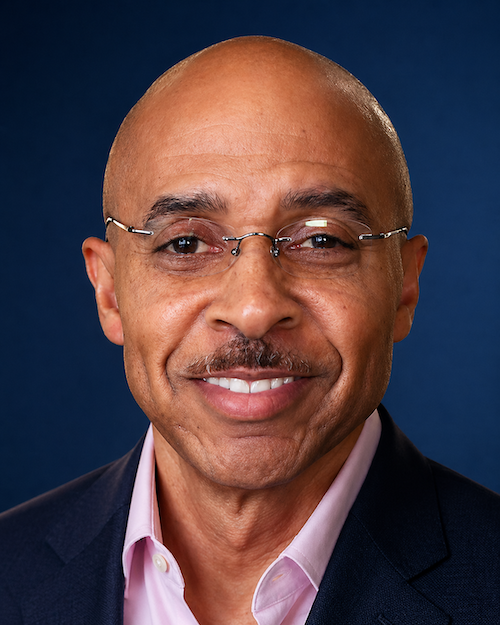
Elias Oxendine IV founded Secure AI Consulting. A fractional CISO with over 30 years of leadership experience, he advises executives on cyber risk and AI governance. He was a vice president and AI Governance Council chair at Tractor Supply Company. He previously led global cybersecurity at Yum! Brands. He began his career as a Navy intelligence officer.


Den:
Hey folks, just before we start today's episode, I'd love to share a little bit about 909 Shield. It's our flagship product that helps you trust the human that's on the other end of the phone or the video. Think of this, right? Someone calls your service desk, they want to change their password or their MFA. They're giving you a lot of stress. You need to do it now. There's a sense of urgency. Well, your service desk people, they want to help, so they'll go reset the password. But today's process is to validate that that person is real on the other end of the line. They're just not up to the challenges of the attacks we're being faced with. 909 Shield helps protect your company and your service desk from these kind of threats by doing identity proofing, biometric and AI fraud, all wrapped into a nice little bundle.
So please, if you want to learn more, go check out 909shield.ai. Hope you enjoyed today's show. Thanks folks.
Narrator:
Welcome to 909 Exec, the executive leadership podcast from 909 Cyber where cybersecurity intersects with business strategy. Your host is Den Jones, founder and CEO of 909 Cyber. Den has been a practitioner for more than three decades, including leading enterprise security at Adobe and Cisco, helping executives navigate risk, trust, and transformation. Each episode goes beyond headlines and hype with conversations that matter to leaders shaping the world of technology. So please join us for 909 Exec episode 71 with Den Jones and Elias Oxendine.
Den:
Hey everybody. Welcome to another episode of 909 Exec, a podcast for executives in tech, and hopefully we support your journey. Welcome to that like, subscribe and all that nonsense whenever you're ready. But every episode I bring in some fantastic guests. And Elias, man, you are a fantastic character. You have got some experience and some stories and some journeys. So thanks for being on the show. Why don't you introduce yourself and then we'll jump right in.
Elias:
Yeah, no, hey, sounds good, Den, and thank you. Glad to be here with you today. So Elias Oxendine, I think in terms of introduction, my career has spanned from early days in the Navy up into cybersecurity leadership and then even to me currently now launching my own advisory business from a cybersecurity fractional CISO, if you will. And so like I said, I got my start in the Navy. I was in the Navy for 11 years. The Navy in itself was a very key professional milestone for myself. That's where I learned how to learn about leadership, how to make decisions, particularly when you don't have perfect information and really just how to overall focus on the mission and have a plan to execute for that. So I was very fortunate, did that for 11 years, had the chance to go through some exciting places, do some exciting things and a lot of things I can't talk about on this podcast, for example.
But then post the military, I did a brief stint as I got into corporate America. I went from Navy Intel and cybersecurity. I did a brief stint as a marketer for Kraft Foods. And Dan, you and I talked about that. Man, the way I landed that job was just basically a bunch of nonsense. If you allow me to digress just a little bit, I told the recruiter no sales or marketing jobs as I'm leaving the military. Give me strictly IT, cyber, those things. And so you can imagine my very first interview for the schedule was the marketing interview with Kraft. And I told the recruiter, this is a complete waste of my time. 40, 45, 60 minutes of my life, I can't get back. And so I walked into that interview, no apprehension, and let's just say I said the most outlandish things thinking there's no way in hell they're going to give me this job.
And the recruiter came back and says, "I don't know what you did in there, but they freaking love you. You're the best number one candidate coming out of this conference." I'm like, "Are you serious?" I'm like, "If I can baffle you with an hour of BS, how hard can it be to sell processed cheese sauce to moms and C&D counts?" Well, turns out it was pretty damn hard because obviously I'm not in marketing here, I'm back in IT and those things. And so very fortunate to get back into IT. I've had opportunity to work for a number of Fortune 500 companies. GE, I got in and led that security program, GE Appliances specifically, up for my time at Brown-Forman. Brown-Forman is an alcoholic and spirits company. They own Jack Daniels with Reserve. Loved that job because you had an alcohol allowance that was given to you every fiscal year and it was use it or lose it.
And let's just say I didn't lose anything. And then even to Yum! Brands, which is KFC, Taco Bell, and used to be Pizza Hut. Pizza Hut has now been spun off to acquired by a private equity firm, but CISO there. And then up to my latest job was with Trapper Supply where I was responsible for security and privacy. However, two months into the role, my boss came and expanded my duties where I took on network, IT operations, IT services, enterprise architect. Hey, don't shake your head, man. Come on. It was a good time, but at least you have the hair to tell. I don't.
But that along with QA and those things. And so that responsibility was a good thing for me. It really got me exposed to all the moving parts of an IT organization, which I knew, but it's different when you're responsible for that. And so you heard me talk earlier about the ability to make decisions. That job was a really good one to help me dial in and focus on that. But I was with Tractor Supply for a little bit over two years and then left Tractor Supply in mid-August to launch my own consulting practice, Security AI Consulting. And so that's a bit about me and my background and how I got to where I am. But why are you shaking your head, man, about IT ops and services and those kinds of things?
Den:
Yeah, we'll get there. We'll get there. But first of all, thank you for your service. We are recording a week before Veterans Day, so appreciate it. I appreciate your service and all the other service members out there past, present, and in the future as well. So that is cool. One thing when you were... So let's roll back time. And by the way, yeah, we'll circle back in this IT thing because I got opinions there. Actually, I've been involved in IT and security for 34 years now, 35 years. So I've formulated opinions over those times, Elias. I'm not shy about that. But I want to roll back though. Why don't you explain a little bit about life growing up? What was the kid, Elias, like? What was your aspirations? What was your life like? The pre-teen kid, what was that life like?
Elias:
Oh, man. Okay. Wow. We're going deep on this one. This might be a therapeutic session by the time we're done. Pre-teen, so parents married early, divorced early when I was a young kid. So I was a small but scrappy kid. I was the only child and those things to my mom remarried 17 years later, but I was the only child. But I had aspirations, believe it or not, I wanted to be an astronaut. Being the small kid, I was the bully. I remember early on, I'm disrupting class. I'm shooting spitballs, pulling girls' hair, doing all these kind of crazy things. Teachers are like, "I'll be glad to get this kid out of my room." But I can remember Mrs. Austin in sixth grade, this is back in the days when they used to, and you probably know this, used to check out televisions from the library, bring a man on those wheels.
And she brought this television in, Den, and she said, "Today we're going to watch the space shuttle launch." And let me tell you, man, I was not the best student, but there was something about watching that space shuttle launch. Man, I sat down. I was zeroed in. They were showing periods when they were up there experiencing zero gravity and I just knew exactly what I wanted to do because my father was in the Air Force, so I grew up around aviation, planes and those things. So when I saw that space shuttle launch, man, I was on a mission from the time I was 12 until I was 22. I was hell bent on being an astronaut. So I set off on this path to get a degree in physics. I went through my high school years. I was able to qualify for a Navy's ROTC scholarship.
My father being an Air Force guy was like, "Hey, you want to go into the Navy? What's up with that?" I said, "Yeah, dad's called a scholarship. You don't pay for a doggone thing." He's, oh yep, go Navy. It's not just a job. And so I was so focused on doing that then. And the Navy has this thing that's called a swim qualification. And particularly for those of us that want to be pilots, it's a little bit more of a strenuous. It's a lot more than what everyone else gets as part of the swim qual. And so I will share with you, man, I thought I wanted that dream. I though I wanted it bad. I probably drank half of the damn pool water that day and I grabbed the live pole. You got a guy, he sees me struggling. He's got a PVC pipe and he sees me struggling.
He's just tapping on my shoulder. All you got to do is just grab the pole, grab the pole. I'm like, get that thing away from me. I've been chasing this dream since 12 years old and I would tell you nothing like drinking some good pool water. All of a sudden I grabbed the pole and I was pulled out. What's crazy about that then is that I could have gone back and I could have retested. I could have trained, could have got better, but man, what's surprising is I let that dream go. I let it go and I transitioned into something else and I was very fortunate to get into Navy Intel after that. But no, scrawny kid, scrappy kid. I was a troublemaker. When people tell you, when you find your calling, it's amazing how impactful something that will be that will set you on the trail, on a path.
And man, that was for me. Yeah, that was all it for me since I hit 22.
Den:
And reflecting back, I think it's a brilliant story. Reflecting back, I always say people never have regrets because everything happens for a reason in my opinion. So I don't look back with regrets. I look back with lessons learned. So what would you say was the lesson learned when you had the dream and you clearly decided that you no longer wanted to chase that dream and then you went into something else? What do you think the lesson was?
Elias:
Yeah, I would say for that, it was always about having a plan, an alternative plan, sometimes B, C, L in some cases, sometimes D, E, and F. And that might've been part of the downfall or me not achieving that dream because I had a plan B for that. But I would share with you, I do think it was wise to have a plan B. Now, like I said, sometimes you have the plan B and C, because even after the failure to join the Naval Aviation, my next plan was to put that physics degree to use. And I was going to join the Navy's nuclear power submarine fleet, the force. And I went to Navy's nuclear power school, six-month program, 24 weeks, and I made it to the 21st or the 22nd week before I was academically disenrolled.
Yeah. Man, lot of stumbles, fumbles early in the career. But what was interesting about nuclear power school, the instructors there, they taught from manuals. They weren't nuclear engineers. They had a manual and they had memorized everything and they were teaching from that. Well, being a physicist, I'm like, "Hey, wait a minute. What you said doesn't make any sense. I got to understand that. Well, Encinox now, we don't have time for this. We need you to hit the I believe button, the magic button." And I'm like, "I'm not doing that." So I fell behind because I was going back trying to relearn it and those kind of things. All that to say, I was academically disenrolled from that. My mother was worried like, "Do I need to come down to Orlando and spend time with you?" And I was like, "No, mom, I'm fine." Because the academic environment then was I left home in the morning.
It was dark and I came home when it was dark because there was classified material you could not bring back. But I got over that. But to your question though, what were the lessons learned? I would say two things. One, it is about having a plan B, C, and D. But I would say also too, the second thing about it is sometimes if things don't work out, all is not lost. Stay focused, heads down, and then you will eventually find your path. And that's eventually how I came across Navy Intel. And if you would've asked me early in my Navy career, would I even though about Navy Intel, I'm like, "No, it's cool. It's James Bond and those kind of things." That's not what I want to do, but I kept an open mind and I tell you, I got in that environment, man, and I thrived and I loved it.
Den:
Yeah. And this is one of the things that you hit on, if you ever have a plan B, so I read this stat somewhere. It was about the percentage of businesses that fail when the founder has a plan B. So it's kind of like you and I doing what we're doing now, right? You're a consultant, you're an advisor, and in order for us to be successful in this, there can't be a plan B because this shit's got to work. When I was building 99 Cyber, I had people offer me jobs along the last couple of years and some really, really great jobs or tease me with them, I'll say. Offering would suggest I actually entertained it and done an interview, but I didn't, but they would tease me with the jobs. And in the end I was like, no, I said that's not a plan B, because the percentage of businesses that fail when you have a plan B is a lot higher than ones when you don't have something to fall back on.
And I think the cool thing about your journey is, I wouldn't say it's like you're the plan B and C, but you certainly covered your bases well with experiences and education that lended themselves to being able to do something adjacent. So when you went down that intel path, you said that clicked and you felt at home there. What was it about that made you feel like it clicked? What was different about it?
Elias:
Yeah, and I'll speak to answer your question, but I'm also going to come back to your point about not having a plan B. I think Tony Robbins says, "Hey, if you're going to take the island, burn the boat. And most likely you will have a tendency to succeed when you don't have a way you can't retreat and those kind of things, right? 100% locked in on that one. So I agree with you. In terms of what was it about the Intel community? The Intel community, I'm highly introverted, so I enjoy going off. If you put me in a room by myself and say, Hey, go solve this physics problem, man, I'm loving it. I'm geeking out on it and those kind of things. So the Intel community was a very small, small community and it does require individuals, and you can do it with a small team, you can do with individuals as well, but there's an aspect of intelligence analysis that you must do to be able to answer the war fighters question.
So my first aircraft carrier, we had daily intel briefs with the Admiral and his staff. So it was a daily meeting at seven o'clock. So you would collect Intel information during the course of 24 hours, and then on that night shift, you are correlating, developing an Intel picture to share with the Admiral. And that was a small team, but that was also me having to get in and look at some fine details and things to try to connect the dots to tell the story and hope when you present it to the Admiral and his team the next day that as the day played out, your intel was correct because if your Intel did not do that, you were not briefing the Admiral and his staff often and those things. But I do think it was, like I said, being highly introverted. I was very analytical and I think the Intel space gave me a chance to tap into that, which I just, like I said, I enjoyed.
But then two, by having a small team, wasn't a large organization. A lot of departments in the Navy are huge. This one was small and it just allowed me I'm much better in a small informal kind of intimate setting as opposed into a large group, if you will.
Den:
Yeah, no, that's excellent. And when you find your calling, or I'll just say when you find an environment that you can breathe in and thrive in, I think it should be effortless to do your thing. It's almost like you should wake up in the morning and be like, "I can't wait to get in there and see what today's going to be about." And one thing is certainly about cyber is every day is not the same. I mean, it certainly has themes and some days can feel like days before, but sometimes you just don't know what you're going to wake up to, which for me is I operate really well and great, so I am really good with nebulous and I will figure shit out. So I don't really mind. Actually, I like that more. And so yeah, no, that's brilliant. Okay, well, let's take a brief break and we'll come right back and then we're going to dig into some fun stuff next.
We'll be right back.
Hey folks, just want to take a minute to say thanks for listening to the show, watching the show, however you engage with us. If you're liking the conversations, if you think we're adding some value, we'd love you to like, subscribe, and share the show with your friends if you know of anyone else that would benefit. Ideally for us, that will help us be able to grow the show, invest more in the quality, get some more exciting guests and keep bringing you some executive goodness. Thanks everybody. Take it easy and enjoy the rest of the discussion. Okay, so Elias, one thing I'd love to talk about, so first of all, leaving the service, going into the public life, what
Elias:
Did
Den:
That feel like? What was that transition like for you?
Elias:
Oh, man. Transparently, tough. That shit was tough. There is a interesting statistic that says, this is for the military, but I think it applies for law enforcement as well, for anyone who's been in the military more than 10 plus years, 80% fail at their first job in corporate America. And that's because you have to unlearn that military leadership style. So in the military, you're walking around with the rank insignia on your collar. Everyone knows what that is, they respect it, they salute and those kind of things. Transitioning into corporate America, that military leadership style does not work well in the cubicle farm, if you will. And so that was part of my experience at Craft. And the reason why I say it was tough, it was a challenge, and there's no such... I wouldn't call Craft a bad or negative experience, but it was an experience.
But here's what made the transition into the corporate America was a challenge for me. One, you're going from military to corporate America, so military, very structured, hierarchical, those kind of things. Corporate America, very flat, very cross-functional, those things. Second, I was going from IT and cyber, which I had just spent the last 11 years doing, to now going into marketing. Yeah, I took an MBA, I had a marketing class. I basically BS my way doing an interview like, yeah, well, how hard can this be? Well, that one marketing class did not prepare me for what was all involved in consumer packaged goods and those things. And then I would say third, I was already a working professional. A lot of folks in my marketing class, they were fresh out of B school, business school, and my call sign was Ox. Everybody would call me Ox.
Hey Ox, man, you don't come down and hang out and do lunch with us in the Atrium. Well, I tried it a couple of times and they're down there talking about last night's episode of Lost. And I'm like, what the hell is Lost? I got a five-year-old, man. We're doing some kindergarten stuff and all these kind of things. So I think when you add up those three factors then and just trying to make that transition, just all those things kind of played into it. But once again, I wouldn't say that Craft was a bad experience, but it was an experience. And so I consider myself very self-aware. And the reason why I say Craft wasn't a bad experience, but as I left Craft and then went into GE, I then had this thing of trying to assess, okay, how do I not repeat what happened there in terms of when I land this next job at GE?
And then the last thing I will share with you, and it took me some time to just get comfortable telling people this probably about three or five years ago, December 31st, 2005, I left Kraft and I told people then, I said, "Well, it wasn't working out. Kraft and I had a mutual agreement that we were going to part ways." Well, no, that wasn't what it was. My ass was laid off. So you're talking about a period of early 2026 from January to the end of April, I was unemployed, and then I started with GE on May 1st of 2020.
Den:
And back then getting laid off certainly had a stigma about it, which probably made it hard to talk about. But I sit there and it's like, well, I think that, first of all, probably the best thing that happened to you because otherwise you'd have stuck that job out and probably not looked for another job. So I always hear people, they're like, "Oh, I was laid off," but then the magical thing happened next. And I think of you being in this marketing gig that's really not your calling, and then the trigger is a layoff. And because that wasn't your calling, then likelihood, you probably weren't their best marketing person because as you said before, you weren't a marketing guy anyway.
So the reality is it probably was the jolt you needed in life to get you on the path that you were meant to be on. And I think, I mean, shit now, man, 2026, I don't know, companies just whack people for fun these days. I mean, you used to think of at some companies that you had a really good stable job and you were safe. I don't think that's the case any longer at all. I don't care which company it is. And actually for me, some of that impetus or thinking was one of the reasons I'm like, "I'll do my own business because I know what I can do, I know what I can deliver." When you jumped into GE, so a couple of things. I always think of this as in your life, now you're going into your career. And so between the Navy, and we'll skip craft, but in the Navy and then in GE, what was some of the best lessons you got from mentors, and was there any big thing that stuck out that really set your career on that right path?
Elias:
Yeah. So believe it or not, I did not have a lot of mentors at that time that transitioned to craft to GE.Like I said, I was very self-aware. So start reading a lot of books on servant leadership, inclusive leadership style, collaboration, those kind of things. So I had to learn how to, like I said, unlearn that military leadership style. This is direction, no one challenges and those kind of things to reading materials and saying, "You know what? It wasn't a bad experience, but I don't want to repeat it." So a lot of reading then is what got me back on track, quite honestly, to go into that role and start being successful. But what was interesting about GE, so GE is very similar to the military, very hierarchical, this huge conglomerate and those kind of things. Hell man, I even do you want this better?
I show up to Appliance Park. Appliance Park is an industrial facility, so they're making appliances and these things. And my manager, first day, he takes me to my office, and what they did is they converted a broom closet and made it into the office. And then, man, he was very apologetic, "Hey, I'm sorry. It's just temporary to redo this," and these kind of things. And so then I stick my head in. First of all, it's painted gray like the ship.
I look at it, I was like, "All right, man, it's gray. Okay." And then I only see one desk and one computer. In my military career, I've never had my own office space. I've always shared a desk in these things. So while he was very apologetic, I was like, "Man, what are you complaining? What do you apologize for?" "This is great. I feel like I'm back on the ship. It's great. I'm inside. I've got an office to myself. Man, I was calling all my buds telling them, Hey, you don't believe this, man. I made it. Look, I've made it. And when I really got an office with a window, man, I thought it was big time. I was big selfie, sent it all to my boys and fleet. Look at your movie now. Just look at me now. But a lot of reading got me into that.
But then the transition into GE was very easy because it's very acronym heavy, it's very hierarchical. And so I kind of felt like I was right back in the Navy, man. Never left.
Den:
Yeah, because GE's an establishment and a large one at that. So that structure and rigor is kind of required. And also as well, because if you think of blue collar, white collar, a lot of that company came through manufacturing and just that heavy grind mindset. So yeah, that makes a lot of sense. Okay. And so I think of it as you got into this whole CISO business and the more leadership stuff. So one bit of advice, as you were going through your career, what's one bit of advice you'd give to someone who goes from that kind of mid-level leadership into the executive CISO type thing? I mean, you are in larger companies as well, right? So I'm sure you could probably come up with lots of more than one bit, but what would be one thing from a mindset?
Elias:
Yeah, I would say, good question, by the way. I got a couple things I'm thinking of on this one, but I would say don't underestimate the power of relationships. One of the things I found out as I transitioned throughout my career, and particularly it took a mentor that gave me release age advice when I was leaving GE, going to Brown-Forman, as structured as GE is you would have a meeting then and we jump right into business. And if we finish talking about the numbers, the metrics, then we say, "Hey, how was your weekend?" And going from GE into Brown-Foreman, Brown-Foreman is very heavy on relationships, and so was Yum! Brand, so is Tractor Supply. So my mentor gave me Sage advice and said, "You need to spend your first six to nine months building relationships and learning the business. Do not walk in with that GE and that military mindset, kick the door in, Hey, I've seen all this waste and we do this, this, this, this and this." And he's like, "Hell, they're trying to figure out do they even like you before you walk in to do that?" So his words were, "Hey, build relationships first and learn the business." So I think for anyone that is obviously in leadership roles or aspiring to do that, do not underestimate the power of relationships because if you can nurture, invest in a relationship before you need to have a tough conversation at some point in time, and they undoubtedly come, but if you can do that first, when you have to have that crucial conversation, a tough conversation, it's a little bit easier because you've connected with the person, they know you, "Hey, Den's a real guy, a good guy, he's leaning in here because it's important.
It's not because he's an asshole, he's just trying to sabotage my career." No, he's coming from a good place, but definitely heavy, never underestimated power relationships and then learn the business, learn how the business makes money so you speak from a really good place.
Den:
Yeah. And I'm guessing that was... So your first role as a CISO was at Yum! Brands, right? So when you land there, I look at it like what was it like going into your first CISO role and how do you explain the difference to people of that versus the role before? I mean, especially at Yum Brands, it's a large company, so how do you describe that role to people when you go from not a CISO to a CISO, and how did you survive that without pulling out? Because I don't think you've pulled all your hair out yet, so you still got some left.
Elias:
Oh man, you sure? You look closer, bro. Hold on, man. Hold on.
Den:
I double check that shit. I've done CISO gigs, but I've done director of security at large companies, which are akin to CISO gigs at other companies, but Yum's a large company, it's got a lot going on. So let's dig into that for a bit.
Elias:
Yeah. Hey, so Brown-Foreman, just allow me to go back. Brown-Foreman, it was the director for the global security program. Brown-Foreman did not hand out the title of chief too often, but that's essentially what it was. But I will tell you, when you get the title, when you get that chief in front of that, all the other positions then were I was supporting someone who made the final call shots. So if something goes wrong, you know what? I'm not the first one to take the bullet. I got so-and-so in front of me that's going to take that shot, that bullet first. Going into Yum! And so you're right, there is a mindset shift and you have to be very courageous or either silly or a psychopath to want to go do that. But a lot of us are aspire to leadership and like big challenges in those things.
What was interesting about the Yum! Role was that I had to wrap my head around is I am the senior guy. I am the one that answers to senior leadership, to the board if something were to happen. It all comes to me and I have to defend that, answer that and respond to that. I think given my military background, even as an intel officer, you have a chance to be a leader of an intelligence organization. I've always had that mindset. I've always wanted to be that leader. I wanted to be that one throat the choke, if you will, for a particular function. I got that with that CISO opportunity at Yum!
My point being, I was always aspiring to that, so it was a little bit of an anxiousness, but not a nervous or bad one. It's almost like going into battle. Your body gets anxious because something's coming, we must prepare for it. Something big is coming, let's get ready for it. If I had anxiety, it was a positive thing that say, "Hey, look, you're getting what you're asking for." But wrapping my head around everything ends with me. So case in point, at Yum! Brands, January 2023, Lockbit comes calling, and it happened on June 14th. It was a Saturday, maybe it was like 6:55. That just ingrained in my head what I'm going to call my guys.
A guy who's leading my SOC came from law enforcement. Lias, this is ransomware. We've got ransomware in here. We got to act soon. We got to do something now. I was just leaving Planet Fitness. I'm a gym rat, so I got my workout in, got my energy out. I'm on the call and I'm going fast, get home, get on this call. And then I have to make the decision to start cutting off parts of the network. To your point, we're a global company. They're not up over in Australia. It's Saturday morning. I start cutting off parts of the network. It's probably the best decision that I made because I had a good team beneath me. But all that, not to stray too far from your question though, it was about, it is that mindset shift, realizing that I am the senior guy. This all falls on me.
And that is a duty and responsibility that you cannot take lightly because you have a whole security function that is looking at you. And one of the things I remind people all the time is that, and this is what people have often said to me about my career, is like, "I've never seen you sweat the details." I'm like, "Well, it's like the ways of the duck above water, everything is cool." Internally, there's a quiet storm. But being in that role, being that senior leader, you have to remember you were always on and your team is always watching you from that perspective. But it is a mindset shift and the buck stops with you.
Den:
Yeah. And I think that's the thing. So it's really, there's the mindset on the minute you get the title, because most CISOs that I know had aspirations to be a CISO. So when they were chasing that title, really chasing the title more than the reality or the dream, they suddenly get it. Then all of a sudden they think they've arrived. And I speak to people, it's like, man, there's just a little bit disappointment when you get there and you're like, oh, okay. It's like not a lot different than before then other than I'll be in more trouble if shit goes bad. So I'm like, what's the plus side of it sometimes?
Elias:
Well, it's interesting you mentioned that. One of my mentors, when I got the appointment to the letter for the CISO, my manager at the time says, Hey, when we get into the throes of some deep shit and it will come, he says, when you're sitting there wondering, why the hell I took this job? I want you to pull out this offer letter and look at it and remember how you felt back in then. Okay, cool. All right, but then we got a job to do. But absolutely. Yeah, that was the best time after that. It was like...
Den:
And the one thing is, a couple of things you mentioned, one is about sweating the small stuff or the details or the sweating anything piece of it. I think the one thing is we're not measured when things are going well. That is general, just run the business. We're doing good, we're coming up with strategies, we're running the team and everyone's all happy. I always say to people, the real measurement of a leader is when shit hits the fan and how you can lead up front with clarity and calmness and not lose your shit as you're being attacked or as the world is crumbling. I was just always blessed with, I actually thrive when that happens. I mean, I've always ran services that were always on services. So if a server went down or your directory goes down or whatever, all those things, I was groomed over 30 years that that's the level of the pressure.
That's just the game we're in. That's the game we signed up for. When a breach happens or when you see an attack happens, I always say to people, there's an incident and then there's a level of incidents all the way to we're screwed.
But when those things happen, I mean the reality is you're going to be under attack. Things like that are going to happen. So you should be planned and prepared mentally and emotionally for that. And it's actually, it's one of the things for me about even the pod is just having discussions like this with people because the reality is a lot of people, businesses think of training and education as technical and some leadership, some management type stuff, but they absolutely will always fall short on the emotional health piece of this. So on the pod, I've got breath work coaches and all sorts of people that have came in that really focus on the softer side of stuff. And that matters to me because I think our mental health when you're under attack is something that we've got to be thoughtful of, not just the attack itself and how we lead people through that.
I want to jump forward. I'm conscious of time, mate, and we could talk forever, I guess, but I want to jump forward to the, at some point you decided to get out of this rat race and start your own business. So I'd love to share what was the deciding factor to decide to go on your own?
Elias:
Yeah. And so for my wife and I, my wife is Japanese, and so we have the one son who's 28 who lives and works in Tokyo, Japan. And so he's been in Japan for three years. And so we would go visit him twice a year, February and August. Somewhere around, I think August or September last year, he had us close out his storage unit in Louisville. Now mind you, we're here in Nashville, and so my wife and I was like, "Wait a minute, so what do you think this means?" And I was like, "I know damn well what it means." I let her know, I said, "He's not coming back." And so we confirmed that with him. Now mind you, he's the only child. And so with that, when we're together then it just feels right. And when we're not, we manage and everything, but we're a small family, close-knit family.
So for me, it really was about I needed more geographic or flexibility.
Den:
Flexibility. Yeah.
Elias:
100%. So in Tractor, Tractor's a great company. Enjoy Tractor, like I said, love the team and everything, what they're about and those things. But family is a priority for me. And especially I think when you get 50 plus, you got more years behind you than you have in front of you, you look at things a little different. And so really for us, it was about that geographic flexibility in terms of what will position me to where I can work and spend time in Japan with our son and those kind of things, but then maintain a foothold here. So that really was the driving thing behind it. But I would also add too, I had launched my consulting practice a year ago, but to your point, you really can't have a plan B or C. You got to go all in or not. So I was just kind of partially taking a little bit of work here, still doing my corporate gig.
And then my wife's like, "Look, hey, it'd be nice to go home. We want to spend time with him." And I was like, "You know what? I think I'm in a position at my point in my life right now, we can do that, so let's go all in." But geographic flexibility, 100%.
Den:
That's brilliant. That's brilliant. And it's funny because I do know a lot of, I'm going to say CISOs, but I know a lot of people that have their full-time gig and then they do some consulting work on the side. And when I was starting 909 Cyber, one of the things people said to me was, "Well, this fractional CISO thing is a really saturated market." And I'm like, "Ah, whatever, that's cool. I'll jump in. I don't mind jumping in." But I did find a lot of VCSOs were getting out of the game because of the instability because some of them were saying, well, their financial... When they're working gigs, they're not out doing biz dev because they're single loan shark people. And I was like, "Well, I'm not planning to be a solopreneur. 909 Cyber is a firm and we're going to build a firm. Whether it's 1099s or full times or whatever, the thing for me was I'll build a firm and we'll have a group of CISOs and then we'll have a group of engineers and we'll do other stuff." And true enough, two and a half years in, that's pretty much how it's played out.
But I'd certainly say the economy and the timing has been definitely rougher than other years, and I've seen that across the board. And then I think with AI coming in, I see that disruption. I mean, everyone talks about this. It's like it's going to be way different than when the internet was born, and I see that already. And I always think of it like there's always opportunity for greatness as part of it. And a good example for us is we became OpenAI Select Partners as a consultant practice. There's a lot of people that are working with OpenAI and they need help. So all of a sudden for 909 Cyber, that's a great opportunity. So while everyone's up in the, not everyone, while many people are up in arms about the AI thing and the devastation, Mr. Jones and 909 Cyber are sitting there saying, "Well, that's great because that's an opportunity for us.
If we play it right and if we get our heads down and we really do it justice and do a great job, then the reward will come." So I always think of things like that. I always think it's like, well, these things never phase me. And I think for you, I mean, if you were going to give anyone advice on them following your path and doing the VCSO, the fraction of that fractional work, what guidance would you give someone in just thinking about getting into it?
Elias:
Yeah, to your comment about the marketplace, the economy is kind of different now. Go into it with eyes wide open, but understand that it's going to take time to get it to launch. I think a lot of times we think that, hey, we have these extensive networks. Hey, I get out. Hey, Dan, know it's been a while. Hey, reaching out here, bud, got my consulting thing, and you think that's going to open some doors for you quickly, that's not the case. So I would certainly say pace yourself and prepare yourself for that. I'm in a process of selling my house and those things, so I favor a slow walk, if you will, of doing this. But at the same time, I am seeing the business aspect pick up on it. But certainly pace yourself. Don't jump in thinking, Hey, I'm going to hit the ground running because what happens is mentally when the lights don't start coming on as fast as you think they will be, that will put you in a place to start thinking, hey, well, wait a minute, what's wrong?
Hey, did I make a mistake? And those kind of things. No, your decision is still right. You just got to understand there's a process to doing this, whether it be entrepreneurship or even your own consulting practice. There are some things that you have to go through. And what's going to happen is you will see moments when the lights will start to flicker and all of a sudden that one light comes on, another comes on. I'll give you case in point. What I'm doing with my fractional business is two ways in which obviously you know this is what you make money. There are projects that you work on, whether it be tabletops, program assessments, those kind of things, but there's also the retainer aspect. And so the retainer piece is what's particularly attractive because if you do it right, that's guaranteed money that comes in month over month.
The project works as icing on the cake. And what was interesting, I was just sharing with my wife, I've got two retainers locked in. They're like, "Oh, this is great." And so we're starting to see this slowly start to build up and get traction, but definitely pace yourself, but it's not going to happen. Take off as you think it would. But when that time comes, stay the course. I mean, Dan, you've been at this two and a half years, man. You've not been at the throes of this a little bit, so you've probably got a position on this as well. But like I said, just understand it's part of that development and that maturation process, but trust me, stick to it. It will start to get traction and take off. And then for you to know it, you'll have so much work coming in to where for the listing folks, Dan's got a firm right now.
I'm army of one right now. But I think I can see ahead of time where eventually it will be where, and I'm kind of low-key soft recruiting people now saying, "Hey, I might need you to do this for me at the time arises. Would you be interested?" So absolutely.
Den:
And the one thing, yeah, a couple of things you mentioned that resonated with me straight away. One was your network. Don't expect your network to suddenly knock on your door. And it's funny because I just thought, well, me and a couple of the core team that were there at the stars, well, we've got a great network. But then I spoke to one of my MSP friends and she'd been convincing me to start one thing for years. And I finally took the jump. And as I said to Sarah, I was like, oh man, nobody's really just calling. And she's like that. She was like, of all the people in her network that had leveraged her and her team services, I was a rare one of them that pulled her in at one of the startups I was at. And then she said, "That's just how it works.
Just because we are hungry, just because we're available, doesn't mean that all the people in your network have a need. They might already have partners and vendors they work with. You might not have what they need.
And as you said, don't lose heart, don't lose focus, keep working at it. And the other thing you mentioned at the start is about your network. Build your network, let people know what you're doing. And you have to remind people you're still doing it. You have to be still checking. I'm just checking in. How are you doing? I'm doing this, you're doing that." And the thing for us, what was very interesting for us, we actually talking about building your team of people, we launched a platform called 909 Select about six months ago, but the origin of it was actually called 909 IC. We were trying to connect cyber students for part-time work while they studied in cyber in the US.
Elias:
Wow. Okay.
Den:
And the reason was I was at a conference in a talk about CISOs on a budget, strategies for CISOs on a budget. One of the things I mentioned was about leveraging students, which when I ran enterprise security at Adobe and Cisco, we had a great internship program and people were like, "Well, where did you find all these?" We did great program, but what if you don't? And I'm like, "That's a good question." So I'd done the research life and I'm like, "Oh fuck, there's nothing or not much. There's handshake and a couple of little things, but nothing focused on cyber." So I got the team, and I'm always famous in my companies for building portals and shit. So we built a portal and it was to connect students in the US. And then we wanted to put some safeguards in, so we apply some zero trust principles like identity proofing, employment background checks and stuff.
And mainly because as I was building the bench, so this is where you were talking about you're now starting to think about your bench, right?
Elias:
Yep.
Den:
When I was building my bench, I'm like, "Well, where am I storing resumes and profiles and notes?" And I'm like, "Well, we've got this thing for students and it's already got the connection for employers and we can use Stripe and we've got students and we've got the ability to match and all of that." I'm like, "Okay, let's evolve that." So we evolved it and then relaunched it called 909 Select, and it's a fully fledged marketplace. So if you think of Upwork and Fiverr, but it covers IT, AI, and engineering roles now, and it's US only, it's geo-fenced, and it's free to join, free to create jobs and post jobs. And then we charge a small platform fee when you enter into a contract. But even the payment and stuff is all handled via our platform. So for us, we built that, but then we put a lot of protections there about identity proofing and stuff, and then we realized in the interview process, there was a lot of fraud there.
So that's then when we built something to fix that, and it was called 909 Shield, and that's our flagship product now. So it's funny, I go from being this consultant thing and then I'm trying to help students because of some brainwave idea. And then all of a sudden we launched 909 Shield that was really the origin of I was just trying to help students. So I look at it like in our journey, like your journey, you end up as a problem solver, you just see some opportunities. But when I started this business two and a half years ago, I had a five-year plan, and honestly, I'm going to be like an Optiv or an E+ or a Defy, those kind of companies. Nowhere was I going to be a rival to Clear or Hire Tofu or any of those companies. I wasn't going to be a product, like a straight up product.
And now we find ourselves, we've got the consultant business, which continues to build, we've got a marketplace which organically just builds, and then we've got this interview fraud or service desk fraud platform. And at the end of it, mate, I was just like, oh shit, I guess I've accomplished the things that I set out to two and a half years ago and about 500 more. So for me, one thing I encourage people to do is if you're truly a problem solver, then keep your eyes open, keep your ears open, talk to people, understand problems. And I think with AI, there's a lot. And by the way, our platforms aren't vibe coded. We have engineers that build shit for a living, right? So for me, not to say that they don't use AI and in the backend we're doing a bunch with AI, which is really cool stuff.
But the reality is I do have on the side actually, I vibe coded my own little app for music, which is for DJs that do harmonic mixing, which is when you mix one song to another, you want them in a harmonic key. So that goes out in the Apple store, I think in the next couple of weeks.
Elias:
Oh man, you would continue to solve problems in those things. I find opportunities.
Den:
Well, I was DJing, I was playing with a little set I was putting together and I'd also been drinking a lot, so I can't remember what my problem was, but I was like, oh, is that key, the right key or not the right key? And I was losing my shit. So then I just jumped on my computer and pulled Lovable out and then created an app.
Elias:
You know what? We got to hang out in those things, but then too, just to your point about always solving problems, spot on because even with my consulting business, there's an AI component to it that helps with outreach and that has transitioned more into account intelligence. A lot of folks I'm speaking to, they're like, "Hey, we got a good product on those things, but we want to get in front of the right people at the right time."
Den:
Yeah, that'd be good.
Elias:
Those things.
Den:
Yeah, I mean, I think we never got quite close. That was on the list of things. So I think one of the things we'll do, Alex, I'd love to set up another slot and grab you back in. And I'd love just to dig really deep into AI and the work that you're doing around AI. Maybe I'll grab another little AI wizard on the show and we'll get a little group, a little panely conversation going on because I think especially if you're doing what we're doing where you're building your young business, what tips and tricks do we have as we're doing this stuff? Because I'm using Claude through the wazoo. As I said, we're opening isolet partners. We're doing a bunch of stuff. So yeah.
Elias:
Love it, man.
Den:
Look forward to it. Normally I do these things for about 35 minutes and we're hitting to almost an hour. So great conversation. As I said at the start, mate, your story is brilliant. You've gone through a journey that I think you can share so many lessons with people. So I appreciate you coming on, sharing your wisdom, spending your time with us today. And yeah, I'll sync up with you to get another little slot in because I do want to dig into an AI conversation and not make it one of those AI security ones, but just AI for business and what we're doing.
Elias:
I look forward to it, Dan. And once again, hey, thanks for having me. I'm glad to be with you today.
Den:
Cool. Thank you, mate. Take it easy.
Elias:
All right.
Narrator:
That wraps up this episode of 909 Exec. If you found value here, subscribe and leave a rating to help others discover the show. To learn more about 909 Cyber, our advisory services, and how we help organizations secure growth, visit 909cyber.com. Thanks for listening. And until next time, lead with clarity, build trust, and stay secure.


